Last Updated on May 2, 2026 by Kravelv Spiegel
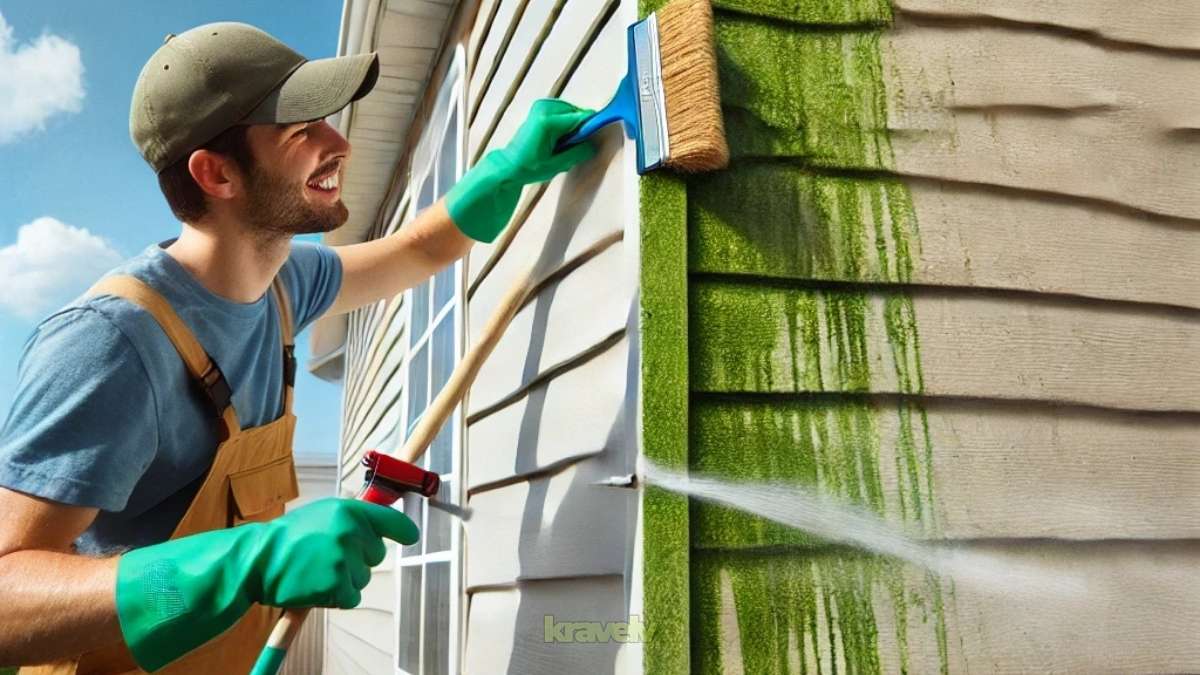
To remove green algae from vinyl siding, use a simple cleaning solution made of water and mild detergent or a diluted vinegar or bleach mixture, then scrub gently with a soft brush and rinse thoroughly with a garden hose. Always clean from bottom to top to avoid streaks and rinse from top to bottom. Regular cleaning and proper moisture control help prevent algae from returning.
Why Green Algae Grows on Vinyl Siding?
Green algae commonly appears on vinyl siding because of moisture, shade, and organic buildup. Areas of your home that receive less sunlight, such as the north-facing side, are more prone to algae growth. When moisture lingers on siding, it creates the perfect environment for algae to thrive.
Dirt, pollen, and other organic debris can also feed algae, allowing it to spread quickly across surfaces. While it may look like a minor cosmetic issue, algae can stain siding over time and reduce your home’s curb appeal if left untreated.
What causes green algae on vinyl siding?
Green algae forms when moisture and organic material combine in shaded or poorly ventilated areas.
Rainwater, humidity, and condensation can all contribute to algae growth. When water does not dry quickly, it creates a damp surface where algae can develop. Nearby trees, bushes, or structures that block sunlight can make the problem worse.
Common causes include:
- Lack of regular cleaning
- Shaded areas with limited sunlight
- High humidity or frequent rain
- Dirt and organic buildup on siding
- Poor drainage around the home
What is the best solution to clean algae from vinyl siding?
The best solution is a gentle but effective cleaning mixture that removes algae without damaging the siding.
Removing green algae from vinyl siding is straightforward with the right cleaning techniques. Here are the most effective methods:
1. Vinegar and Water Solution
- Mix equal parts white vinegar and water in a spray bottle.
- Spray the affected area generously and let it sit for 10–15 minutes.
- Use a soft-bristle brush or cloth to scrub the siding.
- Rinse thoroughly with a garden hose.
2. Bleach and Water Solution (For Heavy Stains)
- Combine 1 part bleach with 4 parts water in a bucket.
- Apply the solution with a sponge or pump sprayer, ensuring even coverage.
- Let it sit for 10 minutes, then scrub gently with a brush.
- Rinse well with a hose to remove any bleach residue.
📌Pro tip: Always wear gloves and protect surrounding plants from bleach exposure by covering them with plastic or rinsing them immediately after cleaning.
3. Commercial Vinyl Siding Cleaners
- Many store-bought siding cleaners are designed specifically to remove algae, mildew, and dirt.
- Follow the manufacturer’s instructions for application and rinsing.
- These products are usually biodegradable and safe for plants.
4. Pressure Washing
- Use a pressure washer on a low setting (1,200–1,500 PSI) to avoid damaging the vinyl.
- Start from the top and work your way down in smooth, even strokes.
- Keep the nozzle at least 12 inches away from the siding to prevent cracks or water seepage behind the panels.
⚠️Caution: High pressure can force water behind the siding, leading to mold or structural issues. If unsure, hire a professional for safe power washing.
5. Soap and Water Scrub (Gentle Cleaning)
This method is ideal for light algae growth and regular maintenance.
- Mix dish soap with warm water in a bucket.
- Dip a soft sponge or cloth into the soapy water and scrub the algae-covered areas.
- Rinse with clean water using a hose.
How do you clean vinyl siding step by step?
Cleaning vinyl siding is straightforward when done correctly.
Start by preparing your cleaning solution and gathering tools such as a soft brush, bucket, and garden hose. Avoid using harsh tools that can damage the surface.
Step-by-step process:
- Rinse the siding with water to remove loose dirt
- Apply the cleaning solution using a sponge or sprayer
- Gently scrub the affected areas
- Work from bottom to top to prevent streaking
- Rinse thoroughly from top to bottom
- Allow the siding to air dry
Taking your time ensures that all algae is removed without harming the siding.
Can you use a pressure washer on vinyl siding?
Yes, but it should be used carefully to avoid damage.
Pressure washers can be effective for cleaning large areas quickly, but high pressure can force water behind the siding or cause cracks. Always use a low pressure setting and keep the nozzle at a safe distance.
If you are unsure, manual cleaning is the safer option.
Pressure washing tips:
- Use low pressure settings
- Keep the nozzle angled downward
- Maintain a safe distance from the siding
- Avoid spraying directly into seams
What tools do you need to remove algae safely?
Using the right tools helps you clean effectively without damaging your siding.
Soft brushes and non-abrasive materials are ideal because they remove algae without scratching the surface. A garden hose is usually sufficient for rinsing.
Recommended tools:
- Soft bristle brush
- Bucket and sponge
- Garden hose
- Spray bottle or pump sprayer
- Protective gloves
How do you prevent algae from coming back?
Prevention focuses on reducing moisture and keeping the siding clean.
Improving airflow and sunlight exposure helps surfaces dry faster, making it harder for algae to grow. Regular cleaning removes dirt and organic material that algae feeds on. Here’s how:
1. Keep Your Siding Dry
- Trim trees and shrubs near the house to allow more sunlight and airflow.
- Adjust sprinklers to avoid direct spray on siding.
- Repair any leaking gutters or downspouts to prevent water from dripping onto your siding.
2. Clean Your Siding Regularly
- Wash your siding at least once or twice a year to remove dirt, dust, and algae spores before they spread.
- Use a garden hose or mild soap solution to keep it looking fresh.
3. Apply an Anti-Algae Treatment
- Consider using a mold and mildew-resistant treatment or coating on your siding.
- Some commercial products help prevent algae growth for several months after application.
4. Improve Drainage Around Your Home
- Ensure that your home’s foundation slopes away from the house to prevent water buildup.
- Use gravel or mulch to help absorb excess moisture near siding.
5. Choose Algae-Resistant Vinyl Siding
- If you’re planning a siding replacement, look for vinyl options that have built-in mildew and algae resistance.
- Some manufacturers offer siding treated with special coatings that make it harder for algae to grow.
By taking these preventative steps, you can keep your vinyl siding clean, bright, and algae-free for years to come!
How often should you clean vinyl siding?
Most homes benefit from cleaning vinyl siding at least once a year.
In areas with high humidity or heavy shade, more frequent cleaning may be necessary. Regular maintenance prevents algae from building up and makes cleaning easier.
Seasonal inspections can also help you catch early signs of algae growth.
Are there eco-friendly ways to clean algae?
Yes, eco-friendly cleaning options are available and effective.
Vinegar solutions are a popular natural alternative to chemical cleaners. They can break down algae without harming plants or the environment when used properly.
Using biodegradable soaps is another safe option for regular cleaning.
What mistakes should you avoid when cleaning vinyl siding?
Avoiding common mistakes ensures that your siding stays in good condition.
Using harsh chemicals or abrasive tools can damage the surface and reduce its lifespan. Skipping rinsing can leave residue that attracts more dirt.
Common mistakes:
- Using high pressure that damages siding
- Scrubbing with abrasive materials
- Not rinsing thoroughly
- Cleaning in direct sunlight
- Ignoring safety precautions
FAQs
It is mostly cosmetic but can cause staining if left untreated.
Yes, vinegar is an effective and eco-friendly cleaning solution.
It can be used in diluted form for tough algae but should be handled carefully.
It depends on the size of the home, but most jobs can be done in a few hours.
Yes, if moisture and shade conditions remain unchanged.
Final words
Removing green algae from vinyl siding is a simple process when done correctly. With the right cleaning solution and regular maintenance, you can keep your home looking clean and well maintained.
Start by inspecting your siding and choosing the appropriate cleaning method based on the severity of the algae. Then establish a regular cleaning routine to prevent future buildup.