Last Updated on May 3, 2026 by Kravelv Spiegel
To arrange a small apartment effectively, focus on clear zoning, multi functional furniture, vertical storage, and uncluttered layouts. Place larger furniture against walls, keep pathways open, and use rugs or lighting to define separate areas. Choose compact pieces that serve multiple purposes and avoid overcrowding the space. The goal is to create a layout that feels open, organized, and easy to move through while still meeting your daily needs.
Why Apartment Layout Matters More in Small Spaces?
In a small apartment, layout is everything. Unlike larger homes, you do not have extra rooms to spread out your furniture or belongings. Every item you place affects how the space feels and functions. A poorly arranged apartment can feel cramped, cluttered, and difficult to navigate, even if it is clean.
A well planned layout, on the other hand, can make a small apartment feel larger and more comfortable. By using smart design strategies, you can create separate zones for living, sleeping, and working without adding walls. This guide will walk you through practical tips to help you arrange your apartment in a way that maximizes both space and comfort.
How do you start arranging a small apartment?
The best way to start is by understanding your space and defining your priorities.
Before moving furniture, take time to measure your apartment and identify key areas such as windows, doors, and outlets. Think about how you use your space daily. Do you work from home, entertain guests, or need extra storage? Your layout should reflect your lifestyle.
Planning ahead helps you avoid unnecessary rearranging and ensures that every piece of furniture has a purpose.
Starting steps:
- Measure your space accurately
- Identify high traffic areas
- Define your main needs
- Sketch a simple layout
- Prioritize essential furniture
How do you create zones in a small apartment?
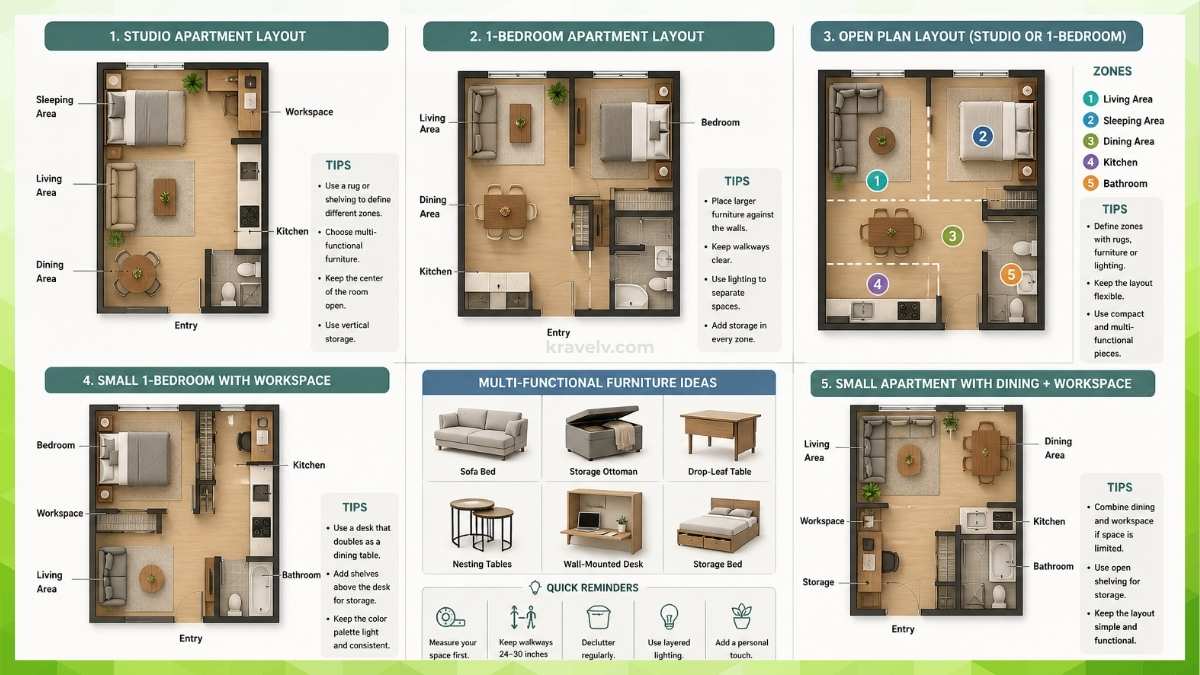
Creating zones helps you separate different functions within one open space.
Even without walls, you can visually divide your apartment into areas for sleeping, relaxing, working, and dining. This makes the space feel more organized and less chaotic.
You can use furniture placement, rugs, or lighting to define each zone without blocking light or movement.
Ways to create zones:
- Use rugs to define areas
- Position furniture to create boundaries
- Add lighting for each zone
- Use shelves as dividers
- Keep transitions between zones clear
What furniture works best for small apartments?
The best furniture for small apartments is compact, lightweight, and multi functional.
Instead of filling your space with multiple pieces, choose items that serve more than one purpose. This reduces clutter and increases efficiency.
Look for furniture that can be easily moved or adjusted based on your needs.
Recommended furniture:
- Sofa beds
- Foldable tables
- Storage ottomans
- Nesting tables
- Wall mounted desks
How should you arrange furniture to maximize space?
To maximize space, arrange furniture in a way that keeps the room open and easy to navigate.
Place larger items like sofas and beds against walls to free up the center of the room. Avoid blocking windows or pathways, as this can make the space feel smaller.
Keeping the center open creates a sense of flow and makes the apartment feel more spacious.
Layout tips:
- Push large furniture against walls
- Keep the center area open
- Maintain clear pathways
- Align furniture with the room shape
- Avoid overcrowding corners
How do you use vertical space effectively?
Vertical space is essential in small apartments because it allows you to store more without using floor space.
Walls can be used for shelving, storage, and decor. This keeps the floor area clear and makes the apartment feel less crowded.
Using vertical space also adds visual height, which can make the room appear larger.
Vertical storage ideas:
- Install tall shelves
- Use wall mounted cabinets
- Add hooks and pegboards
- Hang storage behind doors
- Use stackable storage units
How can lighting improve your apartment layout?
Lighting plays a key role in how your apartment looks and feels.
Good lighting can make a small space feel larger and more inviting. Using multiple light sources instead of a single overhead light creates depth and reduces shadows.
Different types of lighting can also help define zones and improve functionality.
Lighting tips:
- Use layered lighting
- Add floor or table lamps
- Use warm light for relaxation
- Keep spaces well lit
- Avoid dark corners
How do you reduce clutter in a small apartment?
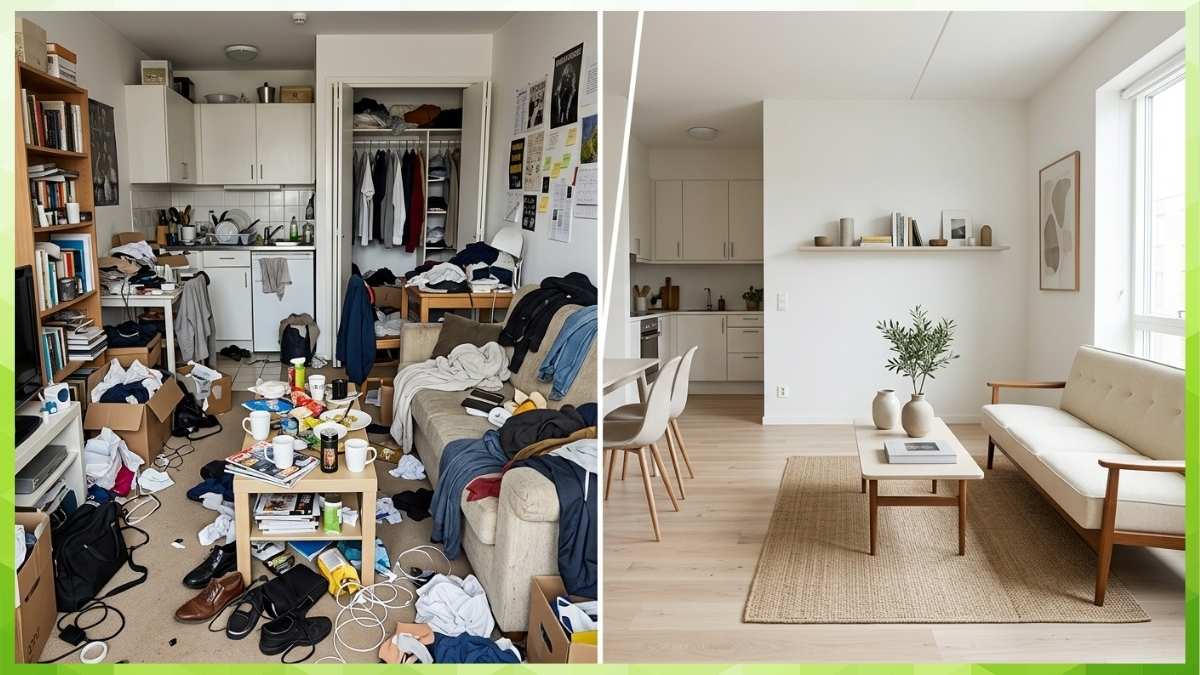
Reducing clutter is one of the most effective ways to improve your layout.
Too many items can overwhelm a small space and make it difficult to move around. Keeping only what you need helps maintain a clean and organized environment.
Regular decluttering ensures that your apartment stays functional over time.
Decluttering tips:
- Remove unused items
- Organize belongings by category
- Use storage solutions
- Keep surfaces clear
- Maintain a simple layout
How do you arrange a small apartment for multiple uses?
Small apartments often need to serve multiple purposes.
You can design your space to adapt throughout the day. For example, a living area can double as a workspace or dining area. Multi functional furniture makes this easier.
Flexible layouts allow you to make the most of limited space.
Multi-use strategies:
- Use foldable or movable furniture
- Create flexible zones
- Store items when not in use
- Use furniture that serves multiple functions
- Keep layouts adaptable
What mistakes should you avoid when arranging a small apartment?
Avoiding common mistakes helps you create a more effective layout.
Overcrowding the space with too much furniture is one of the biggest issues. Poor placement can also block light and disrupt movement.
Common mistakes:
- Using oversized furniture
- Blocking windows
- Ignoring pathways
- Overdecorating
- Not planning the layout
How can you make a small apartment feel bigger?
To make a small apartment feel bigger, focus on openness, light, and simplicity.
Light colors, mirrors, and minimal decor can create the illusion of more space. Keeping the layout clean and organized also contributes to a more open feel.
Small changes can have a big impact on how your apartment feels.
Tips for a spacious feel:
- Use light color palettes
- Add mirrors to reflect light
- Keep furniture low profile
- Maintain open spaces
- Use consistent design elements
Data and Trends in Small Apartment Living
Small apartment living continues to rise in popularity. According to the National Association of Home Builders (2024), demand for smaller living spaces is increasing due to urbanization and affordability.
Multi functional design is a key trend. Studies show that combining multiple uses within one space improves efficiency and comfort (Houzz, 2024).
Additionally, smart layouts and furniture choices can significantly improve perceived space, according to interior design research (Statista, 2023).
Frequently asked questions
Use compact furniture, keep pathways clear, and avoid overcrowding.
Create zones for sleeping, living, and working using furniture and rugs.
Use light colors, mirrors, and minimal furniture.
In small spaces, this often helps maximize open area.
Only when needed, but regular decluttering is important.
Final words
Arranging a small apartment is about making intentional choices that improve both function and comfort. By creating zones, choosing the right furniture, and keeping the layout open, you can transform even the smallest space into something practical and inviting.
Start by evaluating your current layout and identifying areas that feel cramped or underused. Then apply the strategies in this guide to create a more efficient and comfortable living space.