Last Updated on October 9, 2026 by Kravelv Spiegel
Every February I get calls from homeowners who just had guards put on their gutters and now have a wall of ice hanging off the eaves. The first question is almost always some version of “did the guards do this?” I’ve worked on siding and gutters around Eau Claire long enough to give a straight answer on gutter guards and ice dams. The dam started with heat leaking out of the house into the attic. What a guard can do, if it’s the wrong type or put on badly, is make that dam bigger and a lot harder to get off.
That matters here. The UW-Madison State Climatology Office puts Eau Claire’s average snowfall at 55.4 inches a year under the 1991 to 2020 normals, up from 48.0 inches under the 1981 to 2010 set. February 2019 alone dropped 53.7 inches, part of a 98.8-inch season. That month WEAU reported Chippewa Valley homeowners dealing with ice dams damaging homes inside and out, with one local removal company seeing dams from a few inches to a few feet high.
Where Ice Dams Actually Come From
The DOE Building America Solution Center, citing University of Minnesota Extension, defines an ice dam as ice that forms at the eave and keeps melted snow from draining off the roof. Some of that water spills over and makes icicles. Icicles are what people notice, but they often mean more water is building up behind the dam, where it can be drawn under the shingles and leak into the house.
Efficiency Vermont explains the mechanics well. Warm air escaping from the living space reaches the underside of the roof and melts the snow above it. The water runs down to the eave, which hangs out past the heated part of the house, and refreezes there.
Gutters and guards aren’t part of that. Minnesota’s Center for Energy and Environment puts it plainly: an ice dam is a sign of a problem inside the house.
So real ice dam prevention happens in the attic. The Department of Energy’s guide to preventing ice dams lays out the steps in order: fully air seal the ceiling plane, thoroughly insulate the attic, then ventilate the roof. The Minnesota Commerce Department says insulation alone is insufficient to stop air leaks or prevent ice dams. Minnesota’s Clean Energy Resource Teams recommend sealing attic leaks with caulk or expanding spray foam and insulating to a minimum of R-50 where space allows. The Center for Energy and Environment says attic air sealing and insulation projects generally land between $1,000 and $4,500.
How Gutter Guards and Ice Dams Interact
I don’t know of any university, DOE or building-science source that says gutter guards cause ice dams. What follows is trade experience, mine and other installers’.
A gutter pro quoted by HomeGnome said properly installed gutters and leaf guards don’t cause ice dams but could potentially worsen them, and that ice on a house is typically an insulation issue. He also described the failure I dread most: the gutter stays attached to the fascia board, the ice gets heavy, and the fascia gets ripped off the rafters.
Here’s how guards can make a bad winter worse, based on what installers report:
- Meltwater pools on top of the guard instead of passing through, then freezes and builds up.
- Reverse-curve or helmet-style hoods, the ones that work on surface tension, can ice over at the nose. Water then overflows and freezes against the fascia.
- Flat or poorly angled guards can trap snow and ice.
- Mesh guards installed poorly can create a ledge for icicles.
In each case, the guard gives ice a place to hang on. The heat coming from the attic is still the engine.
One honest caveat: there’s no good lab data on gutter guards in winter. Consumer Reports tested guards outdoors for 16 months (480 days) back in 2010, and that testing was about leaves and debris. Snow and ice weren’t part of it.
Choosing the Best Gutter Guards for Ice Dams
When people ask me about the best gutter guards for ice dams, I look at the gutter before I talk about any guard. Is it sized for the roof? Is it pitched properly toward the downspouts? Is it fastened solidly, or sagging between hangers? A guard on an undersized or sagging gutter just hides the problem until the ice finds it.
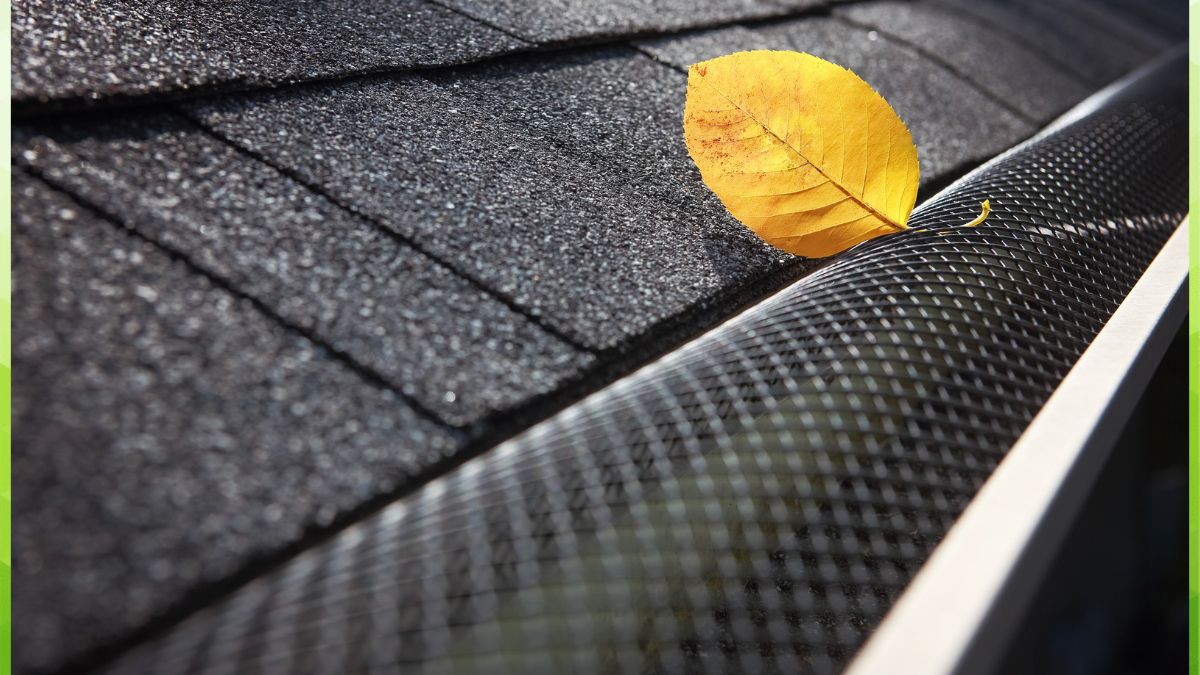
After that, in snow country I prefer a guard that sits on a pitch over one that lies flat. Some micro-mesh guards slide under the first course of shingles and fasten to the front lip of the gutter, so the guard follows a slope. One brand’s stainless mesh has 8,100 holes per square inch, according to The Money Pit. In my judgment, a pitched surface sheds snow and meltwater better than a flat shelf does. If you’re shopping for gutter guards in Eau Claire or anywhere else with real winters, ask how the guard will sit on your gutter and how it handles snow, and expect a straight answer.
Also know what’s under that first row of shingles. Wisconsin’s Uniform Dwelling Code (SPS 321.28) requires ice dam protection on shingled or shake roofs over heated space with a slope of 4:12 or less. It has to be sheet metal or a product meeting ASTM D1970, extending at least 30 inches up the slope from the edge and at least 12 inches past the inner face of the exterior wall.
Heated Gutter Guards and Heat Cable
Heated gutter guards and heat cable can keep a channel open so meltwater has somewhere to go. They treat the symptom at the edge. The attic stays exactly as leaky as it was.
WarmlyYours rates its 120-volt self-regulating cable at 5 watts per foot nominally (at 50 F) and 9 to 10 watts per foot when buried in ice. The company says self-regulating cable is for deicing gutters, downspouts and roof overhangs. Removing snow load from the roof is outside its job.
Heat Tape Pro’s manual says the system must be grounded and GFCI-protected, and it recommends energizing it before temperatures drop below 32 F. On cost, Angi puts heat tape at $1 to $6 per linear foot and says a pro charges $12 to $20 per linear foot to install a heated gutter system. Those are national figures.
Getting a Dam Off Without Hurting Yourself or the Roof
Travelers Insurance recommends a roof rake to clear snow 3 to 4 feet back from the roof edge without damaging the roof covering. Don’t use rock salt. For a dam that’s already formed, a nylon stocking filled with calcium chloride ice melt, laid across the dam, will melt a channel so water can drain.
Experts WEAU spoke with warned against using a pressure washer or chipping at the ice with a pick or shovel. Pros use steam.
And think hard before you climb. A peer-reviewed study in the American Journal of Preventive Medicine, using CPSC data, found an average of 136,118 ladder injuries treated in US emergency rooms each year from 1990 to 2005. Of the cases with a recorded location, 97.3 percent happened in non-work settings such as homes.