Last Updated on November 2, 2026 by Kravelv Spiegel
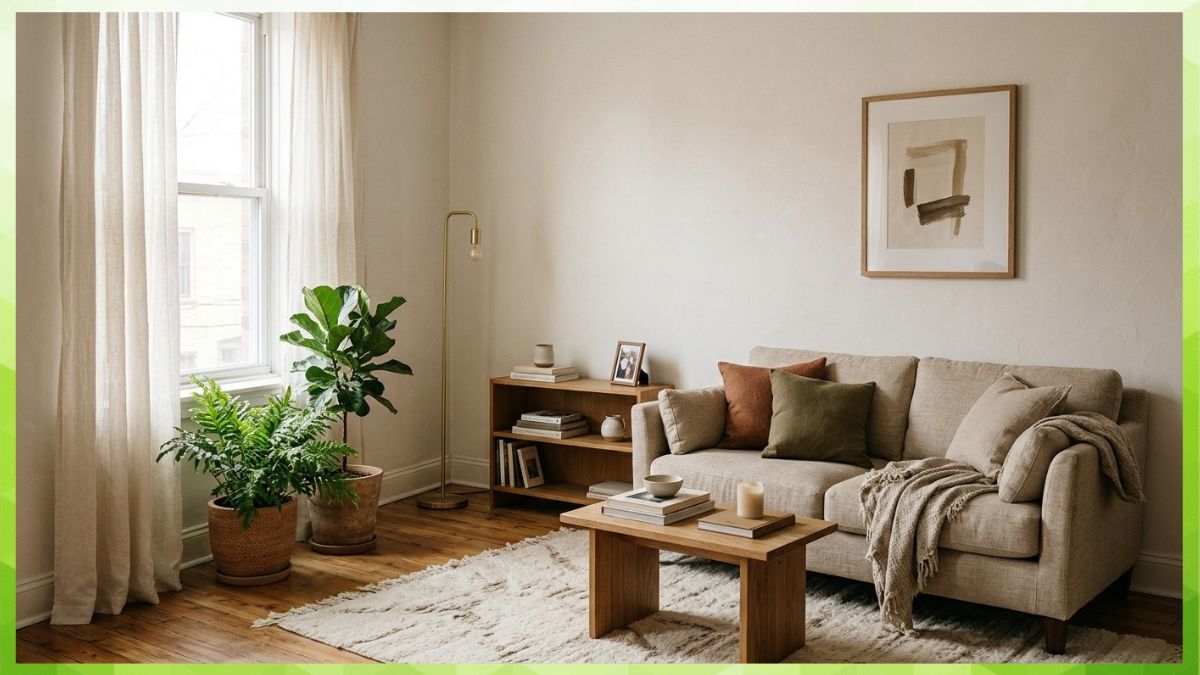
In a small living room, a few extra objects can take up the space you use for everything else. The coffee table becomes a display shelf, the windowsill fills with frames, and there’s nowhere convenient to put a drink.
Yet removing every personal item can leave the room feeling rather anonymous.
The useful question is where those personal details can go without interrupting daily life. A change in placement may be all you need. Before buying storage or adding another shelf, look at the surfaces, walls, and furniture already in the room.
Choose One Area That Needs More Character
Stand in the doorway and look at the room as a whole.
Which area feels unfinished? It might be the wall above a small cabinet, the space beside an armchair, or a section of wall visible from the sofa.
Choose one place to work on first. Trying to improve every corner at once often results in several small arrangements competing for attention.
Consider what already occupies the area. A tall plant, patterned curtain, or open bookcase may provide plenty of visual detail. The quieter wall nearby could be a better place for a personal picture.
Take a photograph from the doorway. A flat image can make it easier to notice whether objects are clustered in one part of the room or spread too evenly across every surface.
You don’t need to fill all the gaps. Some clear space helps you appreciate the things you’ve chosen to display.
Move Personal Details From Surfaces to Walls
Freestanding frames take up more usable space than people expect. Each one needs enough depth to stand safely, and cleaning around several of them becomes a small weekly task.
If a side table is crowded, try moving one or two photographs onto the wall. You may be able to keep the same pictures while recovering space for a lamp, a book, or a cup.
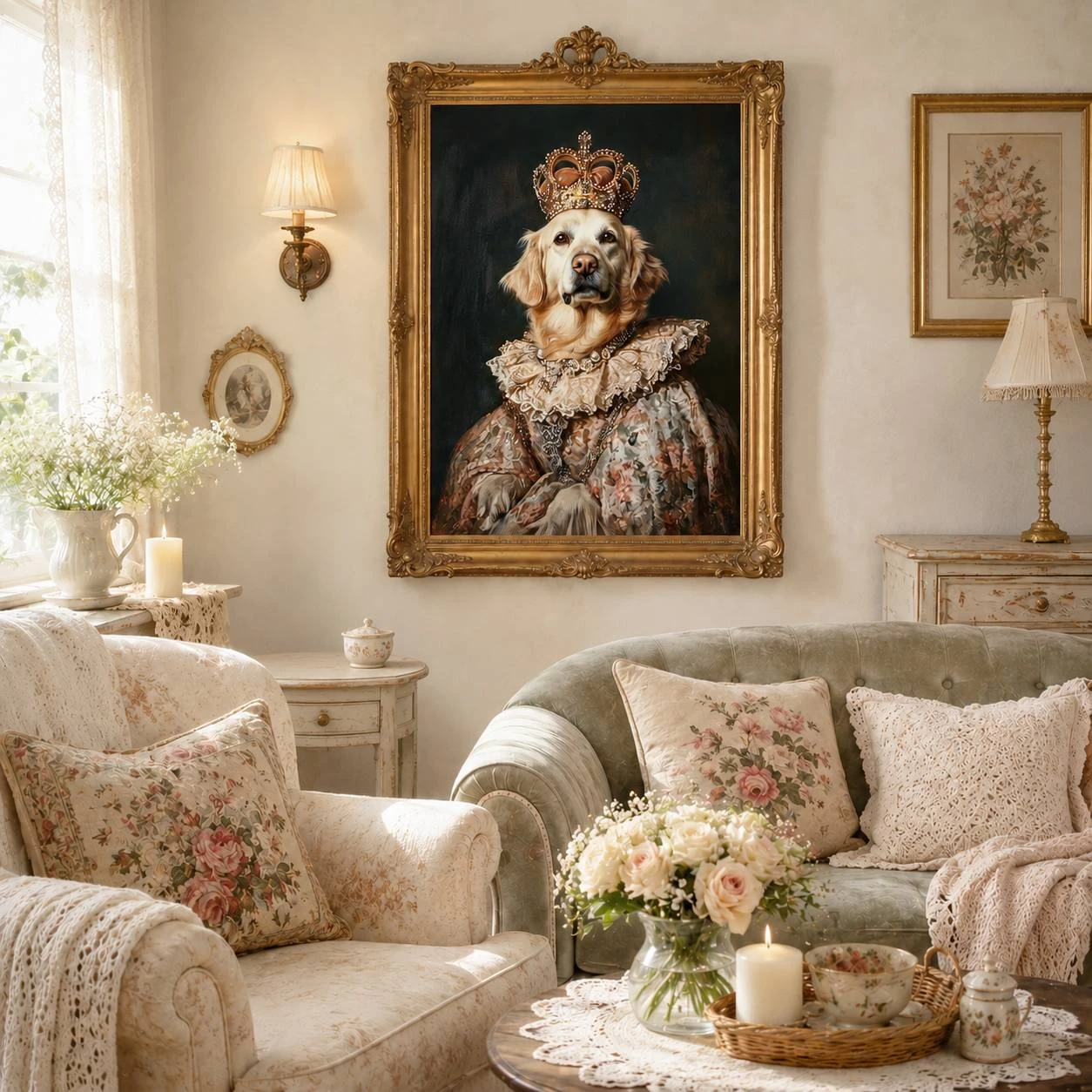
Choose images that mean something to the household. Family photographs, a drawing from a child, or custom dog portraits can all work as personal wall art. The subject matters more than building a coordinated theme.
Before ordering a frame, measure the full available area. Include light switches, furniture edges, and the space needed to open nearby doors.
For renters, check the lease and the wall finish before choosing fixings. Removable products have surface and weight limits, and they can still damage some finishes. Follow the instructions for both installation and removal.
Avoid placing heavy frames where a knock from furniture, a child, or a passing pet could dislodge them.
Mix Family Photos With One Unexpected Portrait
A small group of pictures can feel more interesting when the images have different moods.
You might combine a family photograph, a simple landscape print, and a portrait of the dog. They don’t need to come from the same shop or share identical colors.
An unexpected image can give the arrangement a little personality. For a household that jokes about the dog owning the sofa, a royal portrait of your pet could be a fitting choice among more conventional photographs.
Keep the grouping manageable. Three pieces give you enough variety to test an arrangement without taking over the entire wall.
Lay the frames on the floor first. Move them around until the spacing feels comfortable, then cut paper to their outer dimensions and test those shapes on the wall using a method suitable for the finish.
Look from your usual seat as well as the doorway. A picture can appear well placed when you’re standing directly in front of it but become difficult to enjoy from the sofa.
If one image is especially detailed, give it a little more breathing room.
Repeat a Frame Finish to Keep Things Connected
Different pictures are easier to combine when they share one visible detail.
Frame finish is a practical choice. Black frames can connect photographs with colorful artwork. Warm wood can relate to a cabinet or chair already in the room.
You don’t need the same frame profile throughout. A narrow frame and a slightly wider one can sit comfortably together if their finish is similar.
Consider the frame’s visual weight. A heavily ornamented frame around a small picture may draw more attention than the image itself. That might be the effect you want, but it deserves space.
Mats can help when photographs have different proportions. They also give smaller images some presence without requiring you to enlarge a low-resolution file.
Before buying, check the outer frame dimensions rather than only the print size. Two frames advertised for the same photograph can occupy quite different amounts of wall space.
If you already own mismatched frames, try using them together before replacing them. The arrangement may need only a change in spacing or position.
Leave Tables and Shelves Useful
Once the pictures are in place, return to the furniture beneath them.
Sit down and use the room normally. Put a drink on the side table. Reach for the lamp. Open the cabinet and see whether anything has to move first.
Keep the things that support those everyday actions. A small tray can hold frequently used items, while closed storage can take spare cables, remotes, and other objects you don’t need to see.
Shelves benefit from the same approach. A few books and one personal object may be enough for a narrow section. If every gap is filled, remove something and see whether the remaining pieces become easier to appreciate.
You can rotate photographs and keepsakes rather than displaying all of them at once. Store the extras carefully so changing the arrangement is easy.
After a week, notice where clutter has started returning. That spot may need a practical solution, such as a place for incoming mail, rather than another round of decorating.
The room should still work on an ordinary evening, with someone stretched out on the sofa, a book left open, and the dog occupying more space than seemed possible.