Last Updated on November 9, 2026 by Kravelv Spiegel
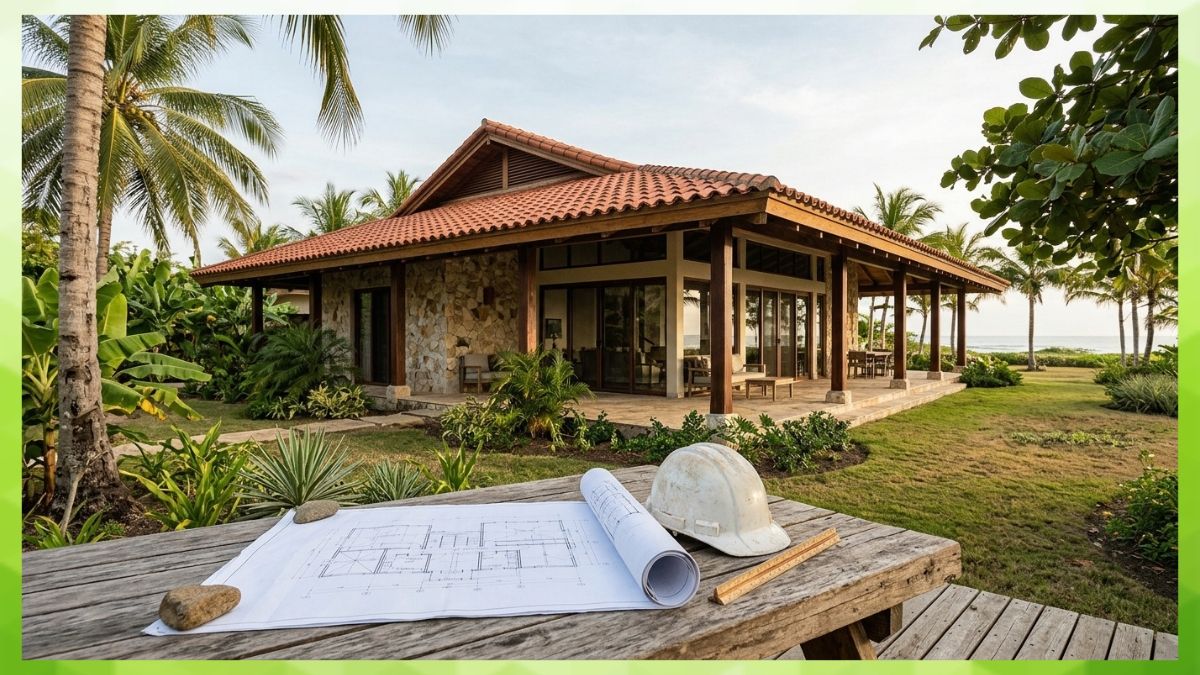
There is a moment many visitors to Pedasí know well. You are standing on a hillside lot with the Pacific stretched out below, the breeze coming off the water, and you start sketching a house in your head: a covered terrace facing the sunset, a small pool, a guest room for the family. Building your own home on Panama’s Azuero Peninsula is one of the most rewarding ways to live here. It is also very different from building in Canada, the United States or Europe. Here is a practical guide to doing it well.
Why people build in Pedasí
Pedasí is a small, friendly town on the southern tip of the Azuero Peninsula, in the Arco Seco, the driest and sunniest part of Panama. It has a real town centre with shops, restaurants, banks and a health centre, quiet beaches minutes away, and some of the country’s best fishing and surfing nearby.
Land here is still priced well below Panama’s busier beach areas, and building often gives you more home for your money than buying one finished. That combination, plus the chance to design around your own routine, is why so many newcomers end up building.
Step one: choose land you can actually build on
The land is where most problems start, so it deserves the most care.
Titled land versus rights of possession. Titled property is registered at the Public Registry with a clear chain of ownership. It is the safest option for foreign buyers and can be financed, insured and resold easily. Some rural and coastal land is held under rights of possession, an occupancy claim over untitled land. It is cheaper and legally recognised, but it carries real risk, and converting it to title is slow and not guaranteed. Know which one you are looking at before you fall in love with the view.
The coastal strip. On the Pacific coast, the first 22 metres inland from the high-tide line is public land and cannot be privately owned. A beachfront purchase needs a survey that shows exactly where that line falls.
Protected areas. Mangroves and other protected areas cannot be titled or built on. Your attorney and surveyor should confirm boundaries on site, not just on paper.
Water, power and internet. Pedasí town has municipal water. Many country and beach properties rely on private wells, often with storage tanks for the dry season. Grid electricity reaches the town and most surrounding communities, and fibre internet is available in town and many nearby areas, but rural service varies. Check every utility for the specific lot, and price in the cost of bringing it in if it is not there yet.
Access. A lot you can reach only by a rough track in the rainy season will cost more to build on and to live on. Drive the road yourself, ideally in both seasons.
Around Pedasí, building lots currently range from about US$45,000 for a large lot near town to over US$300,000 for a beachfront lot in a gated community. Across Panama, land typically runs from about US$25 per square metre inland to US$250 or more for premium oceanfront.
Step two: custom design or a pre-planned home?
This decision shapes your budget, your timeline and your stress level.
A custom home gives you total design freedom over layout, size, materials and style. The trade-off is time and risk. Design and permitting alone often take six to eight months, changes during construction add cost, and some builders under-quote to win the job and then ask for more. Change orders of 8% to 15% are common on custom builds.
A pre-planned home uses a model a builder has already built many times. The plans, engineering and many design issues are already solved, prices are often locked in unless you request changes, and you can still choose finishes, cabinetry, flooring, pools and landscaping. Move-in is often within nine to twelve months.
For most people building in Panama for the first time, a pre-planned home from a trusted local builder offers the best balance of speed, cost control and peace of mind.
Step three: understand the real costs
These 2026 ranges are a planning guide, not a quote:
- Construction on the Azuero (Pedasí, Venao): about US$950 to US$1,250 per square metre, depending on finishes.
- Design and engineering: typically 6% to 10% of construction cost, often included with pre-planned homes. Plans must be stamped by licensed Panamanian architects and engineers.
- Permits and fees: typically about US$2,500 to US$9,000, including a municipal construction tax of around 1%, fire department and health approvals, and the occupancy permit. Coastal or protected sites that need an environmental study cost more.
- Contingency: set aside 10% to 15% of construction cost.
As an example, a 150-square-metre home with mid-range finishes in Pedasí might cost roughly US$142,500 to US$187,500 to build, before land, design, permits and contingency.
Step four: permits and contracts
The builder or architect applies for the municipal construction permit once plans are stamped. Building plans need municipal approval before work starts, and you should allow for a new survey and any connection fees when buying land.
Your construction contract should set out a fixed price, detailed specifications, a payment schedule tied to construction milestones and a warranty. Have your own attorney review it before you sign. Never pay far ahead of the work.
Step five: build, check, then pay
Panama’s construction industry has far less government inspection than many countries. Quality control rests mainly with your builder and the people guiding you. Visit the site regularly or have someone you trust check each milestone before you release the next payment.
When the house is finished, it receives its occupancy permit, utilities are connected, and the new construction is registered at the Public Registry.
Advice from people who have done it
The expats who build happily in Pedasí tend to give the same advice. Visit first, ideally in both the dry and rainy seasons. Rent in town for several months before you buy land, so you learn which areas, roads and neighbours suit you. And work with people who know local building: the builders, surveyors and attorneys who have done this many times on the Azuero.
Useful resources
If you are starting your search, you can browse current homes for sale in Pedasí, along with building lots and land around town. For a deeper look at costs, permits and choosing a builder, this guide to building a home in Panama covers each stage from land to handover.
Building in Pedasí takes patience, local knowledge and a realistic budget. Get those three right, and that sunset terrace you sketched on the hillside can become the place you wake up every morning.