Last Updated on May 23, 2026 by Kravelv Spiegel
The best way to clean grout between tiles depends on how dirty it is. For light stains, a paste of baking soda and hydrogen peroxide applied for 10 to 15 minutes outperforms all other DIY methods in head-to-head testing. For moderate buildup, oxygen bleach dissolved in hot water and left to dwell for 30 minutes lifts deep-set grime without damaging colored grout. For chemical-free cleaning, a steam cleaner at 200 degrees Fahrenheit or higher is the most effective no-scrub option. Chlorine bleach is a last resort for white grout only. After any deep clean, applying a penetrating grout sealer is the most important step to slow future staining. Never use vinegar on natural stone tiles. Never mix cleaning products.
Why Grout Gets Dirty and Why It Stays That Way?
Grout is a porous material. It absorbs moisture, soap residue, dirt, grease, and bacteria continuously through normal use. In kitchens, grout traps cooking oils and food particles. In bathrooms, it collects moisture, mold spores, and hard water mineral deposits. The slight depression grout forms around tile edges creates a low point where dirt settles and accumulates faster than on surrounding tile surfaces.
Unsealed grout absorbs everything faster. Sealant that has worn off, typically after one to two years in high-traffic areas, allows liquids and grime to penetrate the surface rather than sitting on top where they can be wiped away. This is why regularly sealed grout stays clean longer and responds better to cleaning than unsealed grout of the same age.
The most important insight from independent testing is that the baking soda and vinegar combination, while popular, is one of the least effective DIY methods. Testing found that the most disappointing homemade grout cleaners were those that mix reactive ingredients such as baking soda and vinegar. These combinations create reactions that cancel out the cleaning power of both ingredients and can leave grout and tile dirtier. Replacing vinegar with hydrogen peroxide in the same baking soda base produces significantly better results.
Cleaning Method Selector
| Soil Level | Best Method | Tile Safe For | Avoid On |
|---|---|---|---|
| Light surface discoloration | Baking soda and hydrogen peroxide paste | Ceramic, porcelain | Natural stone |
| Moderate stains and mildew | Hydrogen peroxide paste with dish soap | Ceramic, porcelain | Natural stone |
| Heavy buildup and deep stains | Oxygen bleach in hot water | Ceramic, porcelain, colored grout | Natural stone |
| Chemical-free cleaning | Steam cleaner at 200F or higher | Ceramic, porcelain, sealed stone | Unsealed stone or grout |
| Severe mold on white grout only | Diluted chlorine bleach | White ceramic or porcelain only | Colored grout, natural stone |
Method 1: Baking Soda and Hydrogen Peroxide (Best Overall DIY Method)
This is the most consistently effective DIY grout cleaning method confirmed across multiple independent tests. Hydrogen peroxide is a natural alternative to bleach that brightens and eliminates germs. It is non-toxic and decomposes into water and oxygen. Baking soda is mildly abrasive and helps remove dirt that is stuck in porous grout surfaces without causing damage. The combination works on both embedded dirt and surface staining simultaneously.
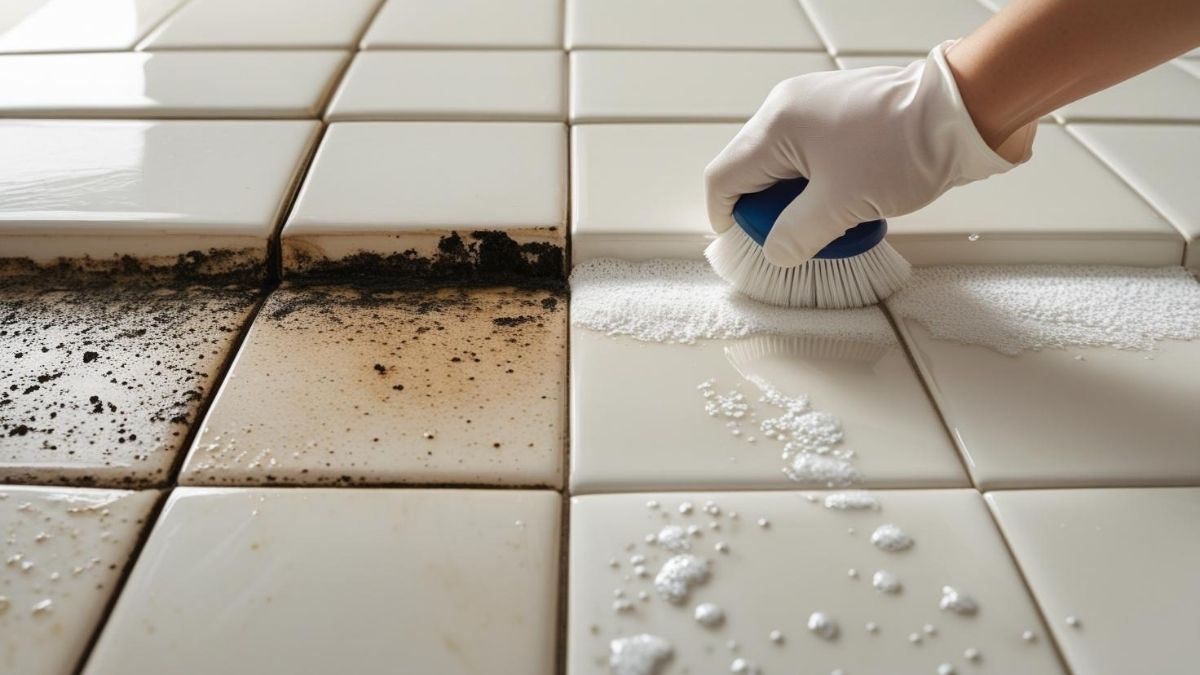
The standard ratio is two parts baking soda to one part 3 percent hydrogen peroxide. Apply the paste directly to the grout lines, spread evenly and thinly, and allow it to sit for 5 to 10 minutes. Use a stiff-bristle grout brush or an old toothbrush to scrub in circular motions, then rinse thoroughly with clean water until all residue is removed. For greasy kitchen grout, add a small amount of plain dish soap to the paste to help cut oil residue. For heavily stained grout, extend the dwell time to 15 to 20 minutes before scrubbing.
Do not use this method on marble, slate, travertine, or any other natural stone tile. The hydrogen peroxide concentration is low enough for most ceramic and porcelain surfaces but the slight bleaching action can affect stone finishes over repeated applications. Always test a small hidden area first on any unfamiliar tile.
Method 2: Oxygen Bleach for Heavy Buildup (Best for Deep Stains)
Oxygen bleach is the preferred commercial option for heavy grout staining. OxiClean, which is commonly called oxygen bleach, is made of a combination of dry hydrogen peroxide and sodium carbonate, which is similar to baking soda. It is less toxic to the environment and more color-safe than chlorine bleach. This makes it the correct choice for colored grout where chlorine bleach would strip the pigment permanently.
Dissolve powdered oxygen bleach in hot water following the manufacturer’s directions. Hot water is crucial to activate the cleaner’s stain-lifting power. Apply the solution to the grout and let it sit for at least 30 minutes, making sure it does not dry out on the surface. If the solution begins to dry, mist lightly with water to keep it active. Let the oxygen bleach solution soak in for 10 to 15 minutes before rinsing. Always rinse with clean water and then wipe the area dry so that the dirt does not resettle into the grout lines.
For severe buildup, a second application on the same day may be necessary before the grout returns to its original color. This method works on both floor and wall grout and is safe for colored grout unlike chlorine bleach. Wear gloves during application and ensure the room is ventilated.
Method 3: Steam Cleaning (Best Chemical-Free Method)
Steam cleaning is the most effective no-scrub grout cleaning method available. Steam cleaners heat water to more than 200 degrees Fahrenheit. Most have a nozzle with a brush to direct blasts of steam onto the grout and easily brush away grime. The high temperature kills mold and bacteria on contact without any chemical product, making it the preferred method for households with children, pets, or chemical sensitivities.
The correct technique involves working in small sections. After steaming, clean up any remaining debris with a small nylon brush. For heavily soiled grout, it may take multiple passes. Let the area air dry for 2 to 4 hours before repeating if necessary. Use a microfiber cloth or mop to absorb dirty water immediately after steaming each section, before it can resettle into the grout.
One critical condition applies to steam cleaning: using a steam cleaner on unsealed grout can force moisture deep into the material and cause damage. Always use a low-pressure setting and test a small inconspicuous area first. Steam is appropriate for sealed grout on ceramic, porcelain, and sealed stone tiles. Confirm your grout is sealed before using this method.
Method 4: Commercial Grout Cleaner (Best for Time-Constrained Cleaning)
Commercial cleaners offer a faster solution for busy households or severe staining. A few of the more popular and effective commercial grout cleaning options are alkaline-based products, as well as oxygen bleach products, according to professional grout cleaner Brian McAuliffe. Alkaline-based cleaners break down grease, soap scum, and mineral deposits efficiently and are widely available at hardware stores and on Amazon.
Recommended commercial options available on Amazon include Zep Grout Cleaner and Brightener (acid-based, for ceramic and porcelain only), Black Diamond Stoneworks Ultimate Grout Cleaner (safe for most tile types), and OxiClean Versatile Stain Remover (oxygen bleach powder, mix with hot water). Always read the product label to confirm compatibility with your tile type before applying, particularly for stone tiles.
The application sequence is consistent across all commercial grout cleaners: apply as directed, allow the recommended dwell time, scrub with a grout brush, and rinse thoroughly. Do not leave commercial cleaners on the surface longer than directed. Residue left behind attracts new dirt and accelerates future staining.
Method 5: Chlorine Bleach (Last Resort for White Grout Only)
Chlorine bleach is highly effective for whitening heavily discolored or moldy grout but carries the most risk of any method on this list. Chlorine bleach may be used on white grout but will leach color out of tinted grout. Oxygen bleach is a better choice for preserving colored grout between tiles. This distinction is absolute. Using chlorine bleach on colored grout causes permanent, irreversible pigment loss.
Mix bleach with water in a 1 to 10 ratio rather than the 1 to 5 ratio some guides recommend. A more diluted solution reduces damage to the grout binder while still delivering bleaching action. Apply to white grout lines only, allow to sit for five minutes maximum, scrub with a grout brush, and rinse immediately and thoroughly. Ensure full ventilation during application. Never mix bleach with any other cleaning product, including vinegar, ammonia, or hydrogen peroxide, as the resulting chemical reactions produce toxic gases.
Repeated use of chlorine bleach degrades grout over time. Use it for single deep-cleaning sessions where other methods have failed on white grout, not as a routine maintenance cleaner.
How to Seal Grout After Cleaning
Sealing grout after a deep clean is the most important step most homeowners skip. A penetrating grout sealer soaks into the grout and forms a barrier that slows moisture and dirt absorption, extending the time between deep cleans and making routine maintenance easier. The most critical step for keeping grout white is to apply a quality penetrating sealer after it has been thoroughly cleaned and dried.
The correct sealing process requires the grout to be completely dry before application, typically 24 hours after cleaning. Apply the sealer along grout lines using the applicator brush included with the product or a small foam brush. Wipe off any excess sealer that lands on tile surfaces within five minutes to avoid a hazy residue. Allow the first coat to penetrate for 10 minutes, then apply a second coat for maximum coverage. For regular maintenance, use pH-neutral cleaners instead of acidic cleaners like vinegar, lemon, or bleach, as these keep the sealant strong and do not eat away at the grout.
Reapply sealer every 6 to 12 months in showers and high-traffic bathroom floors. Kitchen floor grout and lower-traffic areas typically need resealing every 12 to 24 months. A simple water drop test confirms whether resealing is needed: if water absorbs into the grout rather than beading on the surface, the sealer has worn off.
Tools That Make a Measurable Difference
The cleaning solution is only half the equation. The brush or tool used to agitate and remove the dissolved grime determines how much effort is required and how clean the result is. A dedicated grout brush with compact head and stiff nylon bristles outperforms a toothbrush on wide grout lines and floor applications. A toothbrush provides more control in small areas and around fixtures where a grout brush is too wide.
An electric grout cleaning brush, available on Amazon from brands including DRILLBRUSH and Homitt, attaches to a standard power drill and delivers consistent scrubbing pressure without physical effort. These tools reduce cleaning time significantly on large tiled areas and are particularly effective when combined with an oxygen bleach solution that has dwelled for the full recommended time.
Microfiber cloths are the correct tool for wiping up loosened grime and rinsing residue rather than sponges, which redeposit loosened dirt. Use a fresh section of cloth for each wipe rather than recycling the same dirty area across the surface.
Maintenance Schedule to Keep Grout Clean Longer
Prevention reduces the need for deep cleaning more effectively than any cleaning product. A weekly spray of a diluted pH-neutral cleaner followed by a wipe-down removes surface-level grime before it penetrates the grout. In showers, wiping down tile walls with a squeegee or microfiber cloth after each use removes the soap residue and moisture that feed mold and mildew growth.
Deep cleaning every three to six months is the standard recommendation for bathroom and kitchen grout in regular household use. Grout in high-traffic areas, walk-in showers used daily, or kitchens with frequent cooking should be addressed at the three-month mark. Grout in lower-traffic areas, guest bathrooms, and hallways can typically wait for the six-month interval.
Vacuuming or sweeping floor tiles before mopping removes grit that, when wet and agitated, acts as an abrasive that accelerates grout wear. Running the mop over unsswept grit grinds particles into the grout surface with each pass and speeds the breakdown of any sealer present.
When to Regrout Instead of Clean
Cleaning cannot fix physical grout damage. If the grout is cracked, crumbling, pulling away from tile edges, missing in sections, or displaying persistent mold that returns within days of cleaning, the grout needs to be removed and replaced rather than cleaned again. If the grout is permanently stained by chemical dyes, or if it is physically damaged, cracked, crumbling, or missing in sections, it needs to be removed and replaced.
Regrouting a standard bathroom takes a DIYer a full day and requires a grout removal tool or oscillating multitool with a grout removal blade, new grout matched to the existing color, a rubber float, and the same sealing process described above after curing. The investment is worth making rather than continuing to deep-clean compromised grout that cannot recover its appearance or function.
Professional regrouting services average $200 to $700 for a standard bathroom depending on grout line width and accessibility. For large-scale tile areas or epoxy grout installations, professional service is the practical choice over DIY.
Frequently asked questions
A paste of two parts baking soda to one part 3 percent hydrogen peroxide, applied for 10 to 15 minutes before scrubbing, is the most effective DIY grout cleaner confirmed through independent testing. For greasy kitchen grout, add a small amount of dish soap to the paste to help cut oil residue.
Yes. Vinegar is acidic and can weaken grout over repeated use, particularly unsealed grout. It must never be used on natural stone tiles including marble, travertine, or slate, as the acid etches and dulls stone surfaces permanently. Use hydrogen peroxide instead of vinegar in any baking soda cleaning paste.
Deep clean every 3 to 6 months depending on traffic and use. Reseal every 6 to 12 months in showers and high-use bathrooms, and every 12 to 24 months in lower-traffic areas. Perform a water drop test to confirm when resealing is needed rather than following a fixed calendar.
Yes, always. Sealing grout after a deep clean is the single most effective step for keeping it clean longer. A penetrating sealer applied to completely dry grout blocks moisture and dirt absorption and extends the time before the next deep clean is needed.
When grout is cracked, crumbling, missing in sections, or persistently moldy despite cleaning, regrouting is the correct solution. Cleaning cannot restore structural integrity to damaged grout. Continuing to clean compromised grout delays the necessary repair and allows moisture to enter the substrate beneath the tile.
Final thoughts on cleaning grout effectively
Grimy grout doesn’t have to be the price of tiled floors or walls. With the right strategy, starting with smart, safe methods and scaling up only when needed. Choose your approach based on the mess, seal your work to protect it, and stay ahead of future buildup. Clean grout doesn’t just look good, it’s a small win that makes your whole space feel better.