Last Updated on May 25, 2026 by Kravelv Spiegel
Regular cleaning and maintenance keeps a recliner functional and looking new for years. Vacuum the fabric or wipe down leather weekly, treat stains immediately with the right cleaner for your material, and lubricate the reclining mechanism every six months. Ignoring basic upkeep leads to fabric breakdown, stuck mechanisms, and costly repairs or early replacement.
Why Recliner Care Actually Matters?
A recliner is one of the most-used pieces of furniture in any home, and that constant use takes a toll. Oils from skin, pet dander, food crumbs, and dust work into the fabric or leather over time, breaking down fibers and creating odors that are difficult to remove once set. According to furniture care experts, upholstered furniture that is cleaned regularly lasts two to three times longer than furniture that receives no care at all.
By the end of this article, you will know exactly how to clean fabric and leather recliners, how to keep the mechanical parts working smoothly, what common mistakes to avoid, and how to handle the most stubborn stains. Whether your chair is brand new or years old, the same core steps apply.
What Type of Recliner Do You Have, and Why Does It Matter?
Knowing your recliner’s material is the first step because the wrong cleaner can permanently damage the surface. Most recliners fall into one of four categories: fabric (including microfiber and polyester blends), genuine leather, bonded leather (also called faux leather or PU leather), and vinyl.
Genuine leather is treated with conditioners; water alone can dry it out and cause cracking. Bonded leather, which is made from leather scraps and polyurethane, is far more sensitive to moisture and harsh cleaners and tends to peel after a few years regardless of care. Fabric recliners vary widely: microfiber is durable and stain-resistant, while cotton or linen blends absorb liquids quickly and require faster stain response.
Check the tag on your recliner’s cushion or frame. Most manufacturers include a cleaning code:
- W = water-based cleaner safe
- S = solvent-based cleaner only
- W/S = either type is safe
- X = vacuum only, no liquid cleaners
How Do You Clean a Fabric Recliner Step by Step?
Fabric recliners need consistent vacuuming and periodic deep cleaning to stay fresh. Start every cleaning session by removing loose cushions (if detachable) and vacuuming the entire surface with an upholstery attachment, including the crevices around the arms, headrest, and seat seam.
For routine cleaning, mix one teaspoon of dish soap with two cups of warm water. Dampen a microfiber cloth (not soaking wet) and wipe down the fabric in small sections, working from the top of the chair down. Follow immediately with a second cloth dampened with plain water to remove soap residue, then allow the chair to air dry fully before sitting on it again.
For deeper cleaning once or twice a year, a handheld steam cleaner works well on W-coded fabric and kills dust mites and bacteria without chemicals. Keep the steamer moving to avoid over-saturating any one area. For S-coded fabrics, use a dry-cleaning solvent applied to a cloth, never directly to the fabric.
Key steps for fabric recliner cleaning:
- Vacuum weekly, including under cushions and in crevices
- Treat spills within 30 seconds by blotting, never rubbing
- Use the cleaner type that matches your fabric’s care code
- Let the fabric dry completely before using the chair again
- Deodorize monthly by sprinkling baking soda, letting it sit for 15 minutes, then vacuuming it off
How Do You Clean and Condition a Leather Recliner?
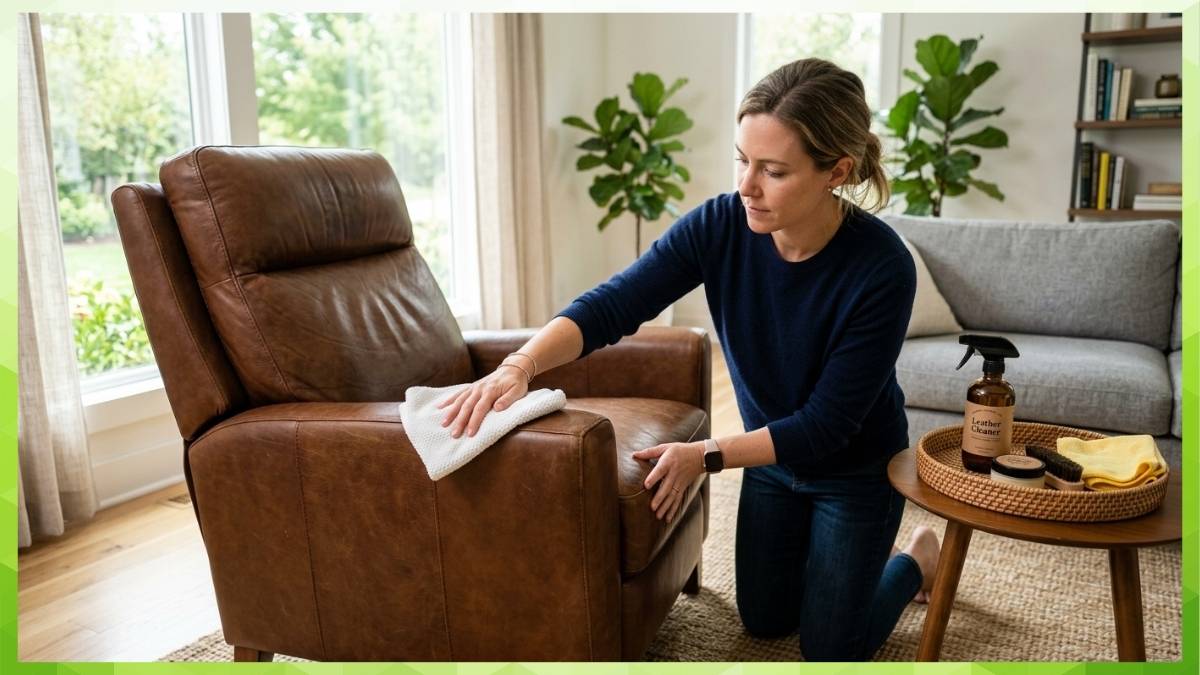
Leather requires both cleaning and conditioning because the material can dry out, crack, and fade without proper moisture replenishment. Wipe down the leather surface weekly with a dry or very lightly dampened microfiber cloth to remove dust and surface oils.
For a deeper clean, use a dedicated leather cleaner (pH-balanced, ideally). Apply a small amount to a soft cloth and rub gently in circular motions. Avoid getting water into the seams or stitching, as trapped moisture can cause mold growth under the leather surface. Wipe away any cleaner residue with a clean damp cloth, then dry the surface immediately.
After cleaning, apply a leather conditioner every three to six months. Conditioning restores the natural oils that regular use and air exposure deplete. Products containing lanolin or mink oil are widely recommended by leather furniture manufacturers. Apply a thin, even layer, let it absorb for 10 to 15 minutes, then buff with a dry cloth.
Bonded leather should not be treated with oil-based conditioners, as they can accelerate peeling. Stick to water-based leather protectors for bonded leather specifically.
How Do You Maintain the Reclining Mechanism?
The mechanical parts of a recliner are just as important to maintain as the upholstery. A stiff, squeaky, or slow-returning footrest is almost always a lubrication problem, not a structural failure, and it takes less than 10 minutes to fix.
Tip the recliner backward so you can access the underside. You will see a series of metal bars, springs, and pivot points. Wipe away any dust or debris with a dry cloth first. Apply a silicone-based lubricant or white lithium grease to each pivot point, joint, and spring coil. Avoid WD-40 as a long-term solution: it displaces moisture initially but evaporates quickly and can attract more dirt over time.
Do this lubrication every six months for a heavily used recliner, or once a year for lighter use. While the chair is flipped, inspect the frame for any loose bolts and tighten them with the appropriate screwdriver or wrench. Check the springs for any that have come unhooked or are visibly stretched out of shape.
For electric recliners, check the power cable and control handset for fraying or loose connections every few months. Keep the motor area dust-free with a can of compressed air.
📖Also read:
Power Recliner vs Manual Recliner: Which Is Better for Small Spaces?
Wall Hugger vs Push-Back Recliner: What Is the Difference?
What Are the Most Common Recliner Cleaning Mistakes?
The most frequent mistake is rubbing a stain instead of blotting it, which pushes the stain deeper into the fibers and spreads it across a larger area. Always press firmly with a clean cloth and lift, repeat, never scrub.
Other common errors include:
- Using too much water on any material, which leads to watermarks on fabric and mold under leather
- Applying cleaning products directly to the surface rather than to a cloth first
- Using all-purpose household cleaners (like bleach or ammonia-based sprays) on leather or bonded leather, which strips protective coatings
- Skipping the conditioning step after cleaning leather
- Forgetting to clean the underside and leg area, where dust and pet hair accumulate heavily
- Ignoring squeaks and stiff mechanisms until they cause visible damage to the frame
How Do You Remove Common Stains from a Recliner?
Stain removal works best when handled immediately, before the substance bonds with the fibers or dries on leather. Here is how to handle the most common types:
Food and grease: Sprinkle cornstarch or baking soda on the stain to absorb the oil. Let it sit for 15 minutes, then vacuum it off. Follow with a damp cloth and mild dish soap on fabric, or a leather cleaner on leather.
Ink: Rubbing alcohol on a cotton swab works on both fabric and leather for small ink marks. Dab lightly and blot away. Do not rub or the ink spreads. Test on an hidden area first.
Pet urine: Blot up as much moisture as possible immediately. Apply an enzymatic cleaner (widely available at pet supply stores), which breaks down the uric acid crystals that cause lingering odor. Regular soap and water will not fully eliminate the smell.
Red wine or coffee: Cold water and blotting first. Then a mixture of one tablespoon of dish soap, one tablespoon of white vinegar, and two cups of cold water, applied with a cloth and blotted dry.
Frequently asked questions
Light vacuuming once a week keeps dust and allergens under control. A deeper clean every one to three months is appropriate for daily-use chairs, depending on whether you have pets or children.
Baby wipes contain moisturizers and sometimes alcohol that can leave residue or dry out leather over time. They are fine for a quick spot clean in a pinch but should not replace proper leather cleaner and conditioner.
A handheld steam cleaner is safe for W-coded fabric recliners. Avoid full carpet cleaning machines, which can over-saturate furniture and cause frame warping or mold growth beneath the cushions.
Squeaking almost always comes from dry metal-on-metal contact at the pivot points. Applying white lithium grease or a silicone-based spray to those joints eliminates the noise in most cases.
Sprinkle baking soda generously over the surface, let it sit for one to two hours (or overnight for strong odors), then vacuum thoroughly. For persistent odor, a light spray of diluted white vinegar allowed to air dry can help neutralize the source.
Final words
A recliner that gets consistent attention stays comfortable, clean, and structurally sound for a decade or longer. The core of good recliner care comes down to three habits: clean the surface regularly with the right products for your material, handle spills the moment they happen, and lubricate the mechanical parts twice a year.
Start with a full inspection this week. Vacuum the entire chair, check the cleaning code tag, flip it over and examine the mechanism, and pick up the right lubricant and cleaner for your specific material if you do not already have them. Set a recurring reminder every six months for a mechanism check and leather conditioning.