Last Updated on August 24, 2026 by Kravelv Spiegel
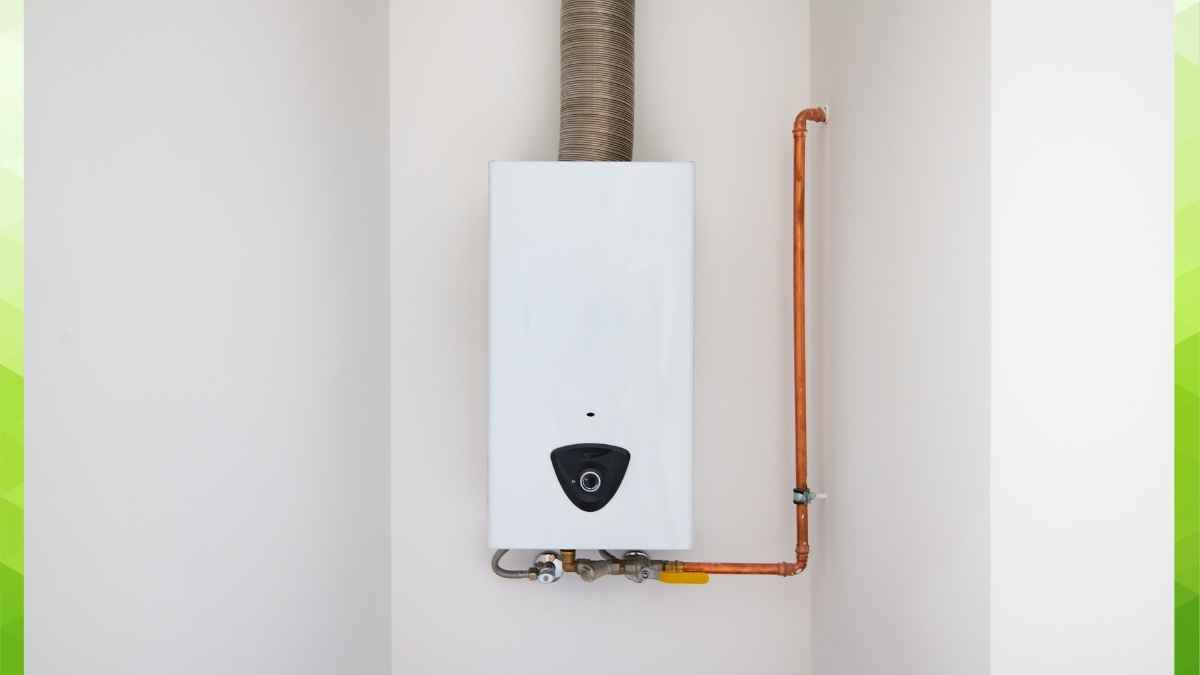
Tankless water heaters are designed to provide hot water on demand without maintaining a large heated storage tank. For many homes, that means compact equipment, efficient operation, and the ability to produce hot water whenever it is needed.
But “tankless” does not mean maintenance-free.
Like any mechanical system, a tankless water heater can gradually lose performance as components wear, mineral deposits accumulate, sensors become dirty, or operating conditions change. The first signs are not always dramatic. A homeowner may simply notice that showers take longer to become hot, water temperature fluctuates, or the unit begins shutting down unexpectedly.
Understanding these early symptoms can make it easier to distinguish a minor maintenance issue from a problem that requires professional diagnosis.
How a Tankless Water Heater Produces Hot Water
A tankless unit begins operating when it detects sufficient water flow through the system.
In a typical gas-fired unit, cold water enters the heater when a hot-water fixture is opened. A flow sensor detects demand, the burner activates, and water passes through a heat exchanger where it is heated before traveling to the fixture.
The process happens quickly, but several systems must work together:
- water flow sensors;
- control electronics;
- burner or electric heating elements;
- heat exchanger;
- temperature sensors;
- gas supply on gas-fired models;
- combustion air and venting;
- water supply and plumbing.
A problem with any one of these components can affect hot-water performance.
1. Hot Water Temperature Starts Fluctuating
One of the most common complaints with an aging or poorly performing tankless system is inconsistent water temperature.
You may notice water that:
- starts hot and suddenly turns cooler;
- alternates between warm and hot;
- never reaches the selected temperature;
- becomes cooler when another fixture is opened.
Why Temperature Fluctuations Happen
Several conditions can contribute.
The unit may be struggling to keep up with simultaneous hot-water demand. A flow sensor or temperature sensor may not be operating correctly. Mineral scale may also interfere with heat transfer inside the heat exchanger.
Plumbing configuration matters as well. The U.S. Department of Energy notes that tankless hot-water delivery can be influenced by factors such as pipe distance, plumbing configuration, flow rate, and water pressure.
An occasional temperature change does not necessarily mean the heater is failing, but repeated fluctuations deserve investigation.
2. The Unit Takes Longer to Deliver Hot Water
Homeowners sometimes assume a tankless heater should provide hot water instantly at every faucet.
That is not necessarily how the system works.
Even though the heater produces hot water on demand, the heated water must still travel through the home’s plumbing to reach the fixture.
Consider the Plumbing Distance First
A bathroom located far from the water heater may take longer to receive hot water than a nearby kitchen sink.
The delay depends partly on:
- distance between the heater and fixture;
- pipe diameter;
- water flow rate;
- plumbing layout;
- whether the hot-water piping is insulated.
DOE research shows that the amount of water stored in the piping between the heater and fixture directly affects how long it takes hot water to arrive.
However, if hot water suddenly begins taking significantly longer to arrive at fixtures that previously performed normally, the heater or plumbing system may need evaluation.
3. Mineral Scale Is Building Up Inside the Heat Exchanger
Hard water is particularly important for tankless systems.
Water containing dissolved calcium and magnesium can leave mineral deposits on surfaces as it is heated. Inside a tankless unit, these deposits can accumulate in the narrow passages of the heat exchanger.
Why Scale Matters More in a Tankless Unit
A tankless heater needs water to move efficiently through the heat exchanger while transferring heat at the correct rate.
As scale accumulates, it can:
- restrict water flow;
- reduce heat transfer;
- increase operating stress;
- contribute to temperature irregularities;
- potentially shorten equipment life.
DOE guidance specifically notes that calcium and lime scale can restrict flow through a tankless heat exchanger and reduce system performance.
Maintenance Depends on Water Conditions
There is no single flushing interval that applies to every tankless water heater.
Manufacturer recommendations vary based on:
- model;
- water hardness;
- water usage;
- operating conditions.
Homes with harder water may need more frequent attention than homes with relatively low mineral content.
The manufacturer’s maintenance schedule should always be the starting point.
4. Hot Water Stops When Flow Is Too Low
Tankless water heaters need to detect water movement before activating.
If the flow through a fixture drops below the unit’s activation threshold, the heater may shut down even though the faucet is still open.
This issue may be noticeable at:
- low-flow bathroom faucets;
- partially opened fixtures;
- fixtures with restricted aerators;
- very low-flow shower settings.
Modern tankless systems generally operate at lower flow thresholds than early generations, but minimum-flow requirements still exist. DOE technical guidance notes that activation thresholds vary by equipment and have been reduced considerably as tankless technology has evolved.
If the problem occurs at every fixture rather than only at very low flows, another issue may be responsible.
5. The Heater Cannot Keep Up With Multiple Fixtures
A properly sized tankless water heater can provide reliable hot water, but every system has a maximum heating capacity.
Opening several fixtures simultaneously increases total flow.
For example, a home might have:
- one shower operating;
- another shower starting;
- a dishwasher filling;
- a kitchen faucet being used.
The heater must raise the temperature of all that incoming water at the same time.
Incoming Water Temperature Matters
The colder the incoming water, the more energy the heater needs to raise it to the desired outlet temperature.
This means the same tankless unit may have different practical capacity depending on:
- climate;
- season;
- incoming water temperature;
- desired hot-water temperature;
- simultaneous flow.
DOE guidance recommends sizing tankless equipment based on both expected maximum flow and the required temperature rise.
If a system has always struggled when multiple fixtures operate, sizing may be the issue rather than a failing component.
If the problem is new, however, the unit should be inspected for changing conditions or component problems.
6. The Unit Displays Repeated Error Codes
Modern tankless heaters monitor their own operation.
When the control system detects an abnormal condition, it may display an error code or shut the heater down.
Depending on the manufacturer and model, codes may relate to:
- ignition;
- combustion;
- venting;
- water flow;
- overheating;
- temperature sensors;
- gas supply;
- exhaust conditions;
- internal electronics.
Do Not Treat Resetting as a Repair
Restarting a unit may temporarily clear an error, but repeatedly resetting the heater without identifying the cause can hide a developing problem.
Write down the code before resetting anything.
The model-specific owner’s manual can usually explain what the code means and whether basic homeowner checks are appropriate.
When codes continue returning, professional diagnosis is generally more useful than repeatedly restarting the equipment.
For persistent performance problems, recurring error codes, leaks, ignition trouble, or unexplained shutdowns, specialized tankless water heater repair can help determine whether the problem involves routine maintenance, a replaceable component, installation conditions, or deterioration within the unit.
7. The Heater Makes New or Unusual Noises
Tankless water heaters are not completely silent.
Fans, burners, valves, and water moving through the unit naturally create some operating sound.
What matters is a change from normal behavior.
Pay attention to:
- rattling;
- knocking;
- high-pitched whining;
- unusual vibration;
- repeated clicking;
- louder-than-normal combustion sounds.
New noises may be associated with scale, loose components, restricted flow, combustion problems, or other mechanical conditions.
Trying to diagnose a tankless heater by sound alone is difficult. The noise is better treated as a symptom that helps narrow the inspection.
8. Water Appears Around the Unit
Visible water near any water heater deserves attention.
Potential sources include:
- supply connections;
- service valves;
- fittings;
- condensate drainage;
- internal components;
- nearby plumbing unrelated to the heater itself.
Condensing Units Need Proper Drainage
High-efficiency condensing tankless heaters generate condensate during operation.
That moisture needs to drain correctly through the system designed for it.
A blocked, damaged, or improperly routed condensate line can create moisture around the unit even when the primary water connections are not leaking.
Never assume water beneath the heater is harmless condensation without identifying where it came from.
Maintenance Problems and Repair Problems Are Not the Same
One useful distinction is whether the heater needs routine maintenance or has an actual failed component.
Routine Maintenance May Include
Depending on the manufacturer’s instructions:
- flushing or descaling;
- cleaning an inlet filter;
- inspecting venting;
- checking condensate drainage;
- inspecting visible connections;
- checking for leaks.
DOE guidance emphasizes manufacturer-directed flushing to reduce calcium buildup that can restrict water flow and affect performance.
Repair May Be Needed When
Symptoms may point beyond ordinary maintenance when:
- error codes repeatedly return;
- the burner will not ignite;
- the unit shuts down during normal demand;
- water leaks from internal components;
- temperatures remain unstable after routine maintenance;
- sensors or controls malfunction;
- a fan, valve, heat exchanger, or other component has failed.
The correct diagnosis matters because flushing a unit will not fix a failed sensor, and replacing a sensor will not solve severe scale accumulation.
What Homeowners Can Check Before Calling for Service
There are several non-invasive observations homeowners can make before scheduling repair.
Check the Basics
Confirm that:
- the unit has electrical power;
- gas service is available if applicable;
- the display shows no obvious error code;
- water supply valves are open;
- other hot-water fixtures show the same problem;
- the issue is not limited to one faucet or shower.
Look for Patterns
Write down when the problem occurs.
For example:
- only during simultaneous showers;
- only at very low flow;
- only during cold weather;
- after several minutes of operation;
- every time the unit starts;
- only at one fixture.
These details can make professional troubleshooting faster.
Review Maintenance History
If the system has never been serviced and the home has hard water, scale becomes a more important possibility.
Likewise, a heater that has received regular maintenance but suddenly develops an ignition error may require a different diagnostic approach.
How to Reduce Future Tankless Water Heater Problems
No maintenance routine can prevent every component failure, but several habits can help keep the system operating as intended.
Follow the Manufacturer’s Maintenance Schedule
Different models have different procedures and service requirements.
Keep the owner’s manual available and record maintenance dates.
Pay Attention to Water Quality
Hard-water scale can significantly affect tankless heat exchangers.
If mineral buildup is a recurring problem throughout the home, consider evaluating the water quality rather than treating each scaled fixture separately.
Do Not Ignore Small Changes
Gradual performance changes are easy to normalize.
A shower that is slightly cooler, an occasional error code, or a new operating noise may not seem urgent. But tracking those changes can reveal a pattern before the system stops producing hot water completely.
Keep the Area Around the Heater Accessible
Do not bury the unit behind stored boxes or household clutter.
Technicians need access to:
- service valves;
- electrical connections;
- venting;
- filters;
- condensate components;
- control panels.
Good access also makes it easier for homeowners to notice leaks or unusual conditions early.
When Repair May No Longer Make Sense
Not every malfunction means the tankless heater should be replaced.
Many problems involve maintenance or replaceable components.
However, replacement becomes more reasonable when several factors occur together, such as:
- significant equipment age;
- repeated breakdowns;
- expensive component failure;
- severe heat-exchanger deterioration;
- difficulty obtaining parts;
- an incorrectly sized system;
- major installation deficiencies.
The decision should consider the condition of the entire system, not simply whether the heater can be restarted one more time.
Final Thoughts
Tankless water heaters can provide reliable hot water for many years, but their performance depends on more than the absence of a storage tank.
Water quality, flow rate, sizing, venting, maintenance, plumbing configuration, and mechanical condition all affect how well the system operates.
Homeowners should pay particular attention to changes: unstable temperatures, recurring error codes, reduced hot-water capacity, unusual noises, visible leaks, or performance that gradually becomes worse.
The goal is not to treat every minor variation as an emergency. It is to recognize when normal operation has changed and determine whether the cause is routine maintenance, household demand, plumbing conditions, or an actual equipment failure.
Addressing the cause rather than repeatedly resetting or ignoring the heater is the most practical way to keep a tankless hot-water system reliable.