Last Updated on April 30, 2026 by Kravelv Spiegel
💡Key Takeaways:
- Suntuf offers dual-sided UV protection; Tuftex protects one side only.
- Suntuf lasts 10–15+ years; Tuftex typically 5–7 years.
- Tuftex is lighter, more flexible, and easier for beginners to install.
- Suntuf carries a 10–15 year warranty vs. Tuftex’s 5-year warranty.
- Choose Suntuf for permanent or high-weather builds; Tuftex for budget or temporary projects.
When it comes to roofing materials for your patio, greenhouse, shed, or pergola, choosing the right panel makes all the difference. Two of the most popular options on the market are Suntuf and Tuftex—but which one is best for your project? Whether you’re a weekend DIYer or a homeowner planning a long-term upgrade, this guide breaks down everything you need to know in plain, simple language.
We’ll compare durability, appearance, price, ease of use, and more so you can make a confident choice.
Suntuf vs Tuftex in a Glance
| Feature | Suntuf | Tuftex |
|---|---|---|
| Manufacturer | Palram Industries | Onduline Group |
| Material | High-grade polycarbonate | Polycarbonate or vinyl (product-dependent) |
| UV Protection | Both sides Winner | One side only |
| Light Transmission | Up to 90% (clear) | Moderate (slightly less) |
| Impact Resistance | High — hail, branches Winner | Moderate |
| Typical Lifespan | 10–15+ years Winner | 5–7 years |
| Warranty | 10–15 years limited Winner | 5 years limited |
| Panel Lengths | 8 ft, 10 ft, 12 ft, 16 ft Winner | 8 ft, 12 ft |
| Color Options | Wide (clear, gray, bronze, white, diffused) Winner | Limited |
| Installation Ease | Medium (stiffer, thicker) | Easy — lightweight & flexible Winner |
| Upfront Price | Higher | Lower Winner |
| Long-Term Value | Better (fewer replacements) Winner | Weaker |
| Best For | Permanent builds, harsh climates, greenhouses | Budget projects, seasonal structures, mild climates |
What is Polycarbonate Roofing?
Polycarbonate roofing panels are strong, translucent plastic sheets used on patios, greenhouses, pergolas, sheds, and carports. Compared to glass, polycarbonate is roughly 200 times more impact-resistant, far lighter, and much easier to cut and install without professional help. It flexes without shattering and admits natural light — making it a practical middle ground between opaque metal roofing and fragile glass.
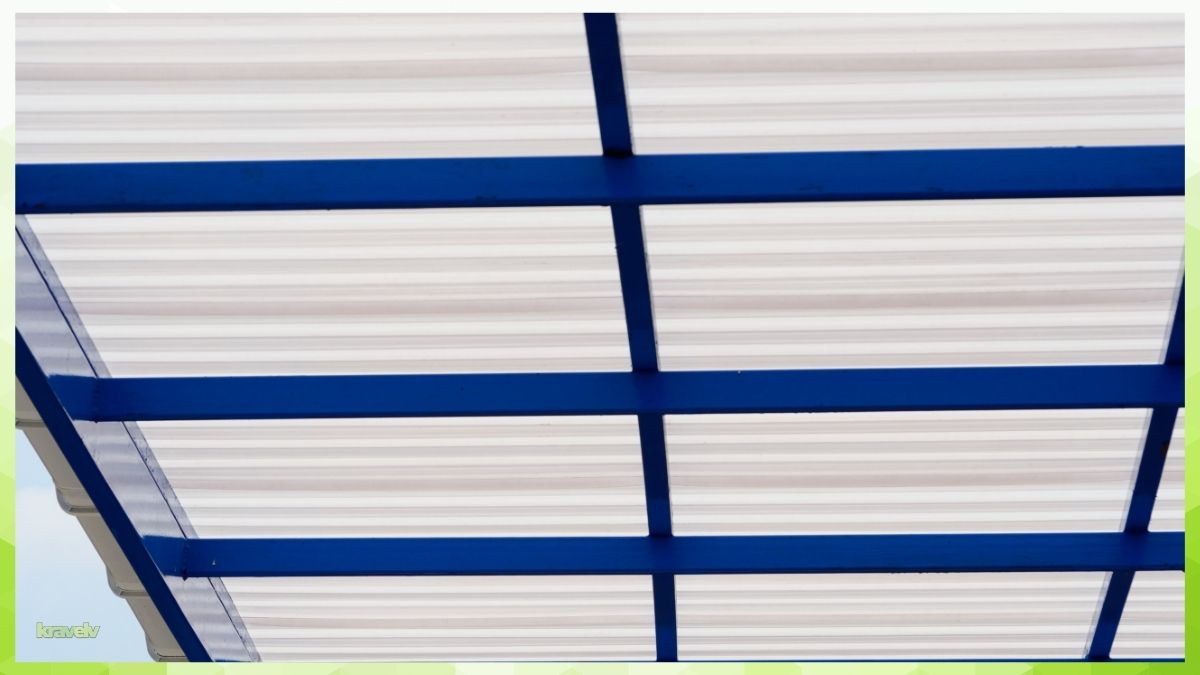
Both Suntuf and Tuftex use a corrugated profile (wavy ridges) that adds structural rigidity and channels rainwater efficiently off the roof. The main differences come down to material grade, UV coating, and overall construction quality.
Material Quality & UV Protection
Suntuf panels are made from high-grade polycarbonate resin and feature a UV-inhibiting coating on both sides of the panel. This dual-sided protection prevents UV rays from degrading the material whether they arrive directly from above or reflect off surfaces below. The result is a panel that resists yellowing, brittleness, and structural breakdown for well over a decade.
Tuftex panels, depending on the specific product line, are made from either polycarbonate or vinyl. The UV coating on most Tuftex panels is applied to one side only. Over time, prolonged sun exposure from either angle can accelerate yellowing and material degradation. In mild or shaded climates this may matter less, but in high-UV environments it shortens the product’s useful life noticeably.
Winner: Suntuf
Dual-sided UV protection gives it a clear material advantage over Tuftex for most climates.
Durability & Weather Resistance
Suntuf panels are designed to handle severe weather: heavy snow loads, high winds, hail impacts, and temperature extremes. Their rigid polycarbonate construction does not crack or shatter under impact the way vinyl can, making them suitable for regions that experience hard winters or violent storms.
Tuftex performs adequately in moderate climates. However, vinyl-based Tuftex products can become brittle in sustained cold and may crack under repeated freeze-thaw cycles or hail impact. Even polycarbonate Tuftex panels are lighter-gauge than Suntuf, which reduces their load-bearing capacity.
Walking on either panel type requires caution, but Suntuf can tolerate light foot traffic when weight is distributed carefully. Walking on Tuftex is not recommended.
Winner: Suntuf
Superior impact resistance and load-bearing capacity make it the better choice for extreme-weather regions.
Design Options & Light Transmission
Suntuf is available in a wide palette: clear, solar gray, bronze, white, and diffused-light options. Clear Suntuf panels transmit up to 90% of natural light, making them a top choice for plant growth in greenhouses. Solar gray and bronze versions reduce heat buildup under the panel — useful for patio covers in sunny climates.
Tuftex offers a narrower color range. It works well aesthetically for sheds and secondary structures but gives homeowners fewer choices when trying to match an existing design scheme or optimize for a specific light level.
Winner: Suntuf
More color options and higher peak light transmission give it more design flexibility.
Ease of Installation
Tuftex is the easier panel to work with on-site. It is lighter, more flexible, and simple to cut with a circular saw or even heavy scissors for thinner vinyl versions. A solo DIYer can maneuver Tuftex panels with little difficulty, and the flexible nature of the material allows slight adjustments once panels are positioned.
Suntuf panels are thicker and stiffer, requiring more careful handling to avoid stress fractures near fastener holes. Palram supplies branded installation accessories — foam closure strips, screws, and ridge caps — that take the guesswork out of waterproofing and alignment, but the process involves a few more steps than Tuftex installation.
Winner: Tuftex
Lighter weight and greater flexibility make it the friendlier option for first-time or solo installers.
Sizes & Panel Options
Suntuf comes in lengths of 8 ft, 10 ft, 12 ft, and 16 ft, all at a standard 26-inch width. Multiple thicknesses are available, allowing customization based on snow load requirements or structural needs. This range reduces cutting waste on longer spans.
Tuftex panels are typically available in 8 ft and 12 ft lengths. The more limited size range means more cutting and more waste for larger projects, and fewer options for matching unusual span lengths.
Winner: Suntuf
Greater length variety reduces cutting and accommodates larger or custom-span projects more efficiently.
Cost Comparison
Tuftex costs less per panel than Suntuf at the point of purchase. For a small shed roof, seasonal patio cover, or one-time temporary structure, the savings can be meaningful. If the structure is unlikely to outlast the panel’s lifespan anyway, Tuftex represents reasonable value.
Suntuf costs more upfront, but its longer lifespan (10–15+ years vs. 5–7 years) means fewer replacements over the life of a structure. On a permanent patio or greenhouse, the total cost of ownership often favors Suntuf once replacement labor and materials are factored in.
Winner: Tuftex on upfront cost. Suntuf wins on long-term cost of ownership for permanent structures.
Warranty and Support
Suntuf carries a 10-year limited warranty on most products, with select panels backed by a 15-year warranty. Coverage typically includes protection against yellowing and breakage under normal conditions. Palram is a large, established manufacturer with widely available replacement parts and customer support.
Tuftex provides a 5-year limited warranty, which is standard for lighter-duty panels in this category but noticeably shorter than Suntuf’s coverage. The shorter warranty reflects the panel’s expected service life in high-sun or high-impact environments.
Winner: Suntuf
A warranty up to three times longer reflects greater confidence in long-term performance.
Common Applications
Greenhouses
Suntuf is the clear choice. High light transmission (up to 90%), impact resistance, and multi-decade durability make it well-suited for year-round growing structures. The dual UV coating also means plants are not harmed by filtered UV exposure over the long term.
Patio Covers & Carports
Both panels work for patio covers. Suntuf is preferred when the patio is meant to be a permanent feature; Tuftex is acceptable for seasonal or rental-property installations where budget is the primary constraint.
Sheds & Gazebos
For a simple backyard shed or gazebo, Tuftex offers good value. If the structure is designed to last 15–20 years, investing in Suntuf avoids the cost and effort of re-roofing midway through its life.
Pros and Cons of Suntuf
| PROS | CONS |
|---|---|
| ✅ 10–15+ year lifespan ✅ Dual-sided UV protection ✅ High impact resistance ✅ Up to 90% light transmission ✅ Wide color and size selection ✅ 10–15 year warranty | ❌Higher upfront cost ❌Stiffer — slightly harder to handle solo |
Pros and Cons of Suntuf
| PROS | CONS |
|---|---|
| ✅Lower purchase price ✅Lightweight and flexible ✅Easy for beginners and solo installs ✅Adequate for mild climates | ❌One-sided UV protection only ❌Shorter 5–7 year lifespan ❌Limited sizes and colors ❌Not suitable for walking on ❌Only 5-year warranty |
Which Panel Is Right for You?
There is no universal winner — the right panel depends on your project’s permanence, climate, and budget. Here is a straightforward guide:
| Choose Suntuf if… | Choose Tuftex if… |
|---|---|
| You want it to last Your structure is permanent, you live in a region with heavy snow, hail, or intense sun, or you are building a greenhouse where panel clarity and durability directly affect plant health. | Budget comes first You are on a tight budget, building a seasonal or temporary structure, working in a mild climate, or doing a first-time DIY install where lighter, more flexible panels make the job easier. |
For most permanent residential builds — patios, greenhouses, carports that will be in place for a decade or more — Suntuf is the better investment. Tuftex remains a legitimate choice for cost-sensitive or lower-stakes projects.
Suntuf vs Tuftex FAQs
Yes, for most applications. Suntuf outperforms Tuftex on durability, UV protection (both sides vs. one), lifespan (10–15 years vs. 5–7), and warranty coverage. Tuftex is the better choice only when budget and installation ease are the primary considerations.
Suntuf is a premium polycarbonate panel with dual-sided UV coating, higher impact resistance, and a 10–15 year warranty. Tuftex is available in polycarbonate or vinyl, offers UV protection on one side only, and carries a 5-year warranty. Tuftex costs less upfront but has a shorter lifespan.
Suntuf is the recommended choice for greenhouses. It transmits up to 90% of natural light, resists yellowing for over a decade, and withstands the heavy snow and wind loads that greenhouse structures face year-round.
Suntuf panels can handle light foot traffic when you step on the ribs (ridges) and distribute weight with a plywood board. Tuftex panels are not designed for foot traffic and may crack or deform under a person’s weight.
All polycarbonate panels can yellow eventually due to UV exposure. Suntuf’s dual-sided UV coating slows this significantly — panels typically remain clear for 10+ years. Tuftex, with a single-sided coating, may begin yellowing sooner under prolonged direct sun.
Yes. Both panels can be cleaned with warm water, mild dish soap, and a soft cloth or sponge. Avoid abrasive scrubbers, solvent-based cleaners, or pressure washers at close range, as these can scratch the UV coating and accelerate degradation.
Final words
Suntuf and Tuftex both offer great solutions for roofing projects—but they serve different needs. Suntuf brings durability, better warranties, and long-term value. Tuftex offers flexibility, ease, and affordability. At the end of the day, your choice depends on what you’re building and how long you want it to last.