Last Updated on April 28, 2026 by Kravelv Spiegel
💡Key Takeaways:
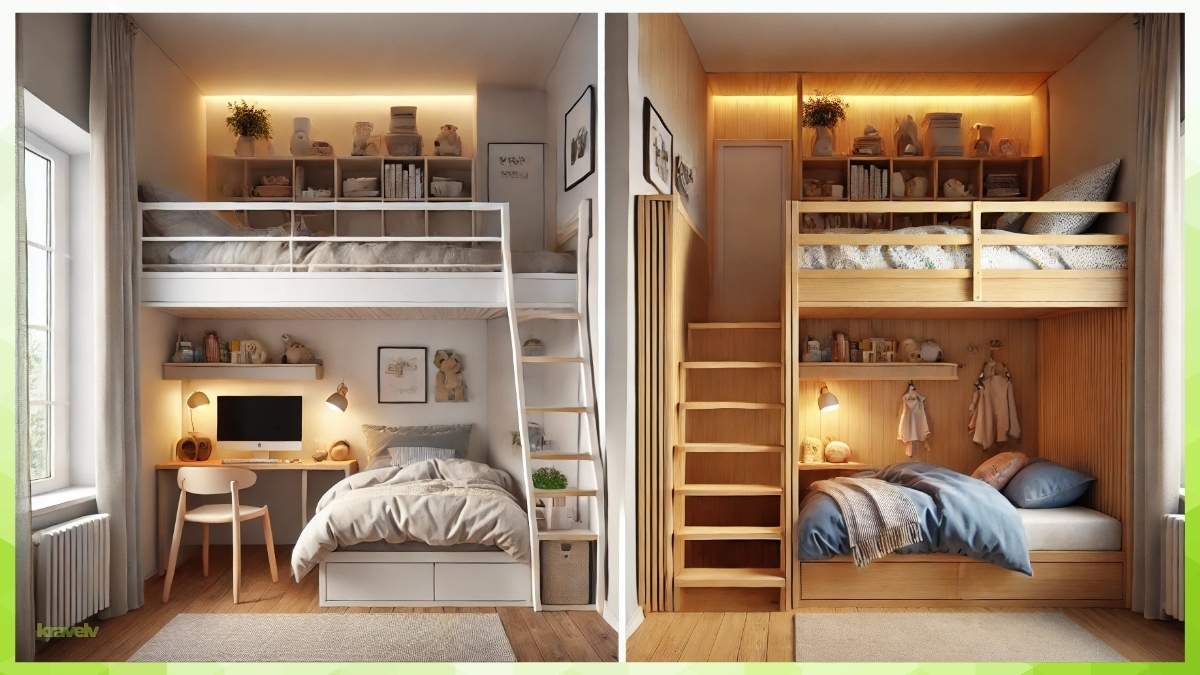
For small bedrooms, loft beds are better for maximizing usable floor space, while bunk beds are better for sleeping multiple people in the same room. A loft bed elevates one bed to create space underneath for a desk, storage, or seating. A bunk bed stacks two beds vertically, which is ideal for shared rooms. The best choice depends on whether you need more space or more sleeping capacity.
Why This Choice Matters in Small Bedrooms?
Small bedrooms require careful planning because every piece of furniture affects how the space feels and functions. Choosing the wrong bed can make the room feel cramped, limit movement, and reduce storage options. Beds take up the most space, so selecting the right type has a major impact on layout and comfort.
This comparison will help you understand how loft beds and bunk beds work, their pros and cons, and which one fits your needs. By the end, you will be able to choose a bed that improves both functionality and comfort in a limited space.
Loft bed vs bunk bed in a glance
| Feature | Loft Bed | Bunk Bed |
|---|---|---|
| Sleep capacity | 1 person | 2 people |
| Best for | Teens, adults, solo sleepers | Siblings, shared rooms |
| Under-bed space | Usable for desk, seating, storage | Not available |
| Room functionality | High (multi-use) | Sleep-only |
| Space saving | Excellent | Good |
| Customization | High | Moderate |
| Age suitability | Best for 6+ (low lofts for younger kids) | Top bunk: 6+, bottom bunk: any age |
| Visual impact | Light, open feel | Heavier, cozier |
| Budget range | Mid to high | Wide, often more affordable |
| Ideal ceiling height | 8+ feet for high lofts | 7+ feet for safety |
What is a loft bed and how does it work?
A loft bed is a single elevated bed with open space underneath for other uses.
Instead of placing another bed below, the space is left open. This area can be used for a desk, storage units, seating, or even a small workspace. Loft beds are commonly used in studio apartments, dorm rooms, and small bedrooms where space is limited.
They are especially useful for individuals who want to combine sleeping and living functions in one compact area.
Common uses for loft beds:
- Wardrobe or closet space
- Study or work desk
- Storage shelves or drawers
- Lounge or seating area
What is a bunk bed and how does it work?
A bunk bed is a two-bed structure where one bed is stacked on top of another.
This design allows two people to sleep in the same floor area that would normally fit one bed. Bunk beds are commonly used in shared bedrooms, children’s rooms, and guest spaces.
They are ideal when sleeping capacity is the main priority.
Typical features of bunk beds:
- Two stacked sleeping areas
- Ladder or stairs for access
- Guardrails for safety
- Compact footprint
Which option saves more space in a small bedroom?
Loft beds save more usable space because they free up the entire area underneath the bed.
While both options use vertical space, bunk beds use it for an additional sleeping area. Loft beds, on the other hand, convert that space into functional living or storage space.
This makes loft beds more versatile for single occupants who need room for activities beyond sleeping.
Space comparison:
- Bunk bed: better for shared bedrooms
- Loft bed: creates usable floor space
- Bunk bed: maximizes sleeping capacity
- Loft bed: better for multifunctional rooms
Which is better for kids, teens, or adults?
The better choice depends on who will use the bed and how the room is used.
Bunk beds are often preferred for children who share a room because they provide two sleeping spaces. Loft beds are more suitable for teens and adults who need space for studying or working.
Safety is also a factor. Younger children may need lower beds or additional guardrails.
Best use by age group:
- Guest rooms: bunk beds for flexibility
- Kids sharing a room: bunk beds
- Teens: loft beds with study space
- Adults: loft beds for compact living
What are the pros and cons of loft beds?
Loft beds are ideal for maximizing space, but they are not suitable for every situation.
They work best in rooms with sufficient ceiling height. Climbing up and down may also be less convenient for some users.
Pros:
- Maximizes usable floor space
- Supports multi-functional layouts
- Ideal for small rooms and apartments
Cons:
- Less convenient access
- Only one sleeping space
- Requires higher ceiling clearance
What are the pros and cons of bunk beds?
Bunk beds are designed for efficiency in shared spaces but come with limitations.
They are practical for families or households that need multiple sleeping areas. However, they do not provide additional functional space beyond sleeping.
Pros:
- Accommodates two sleepers
- Saves floor space compared to two separate beds
- Ideal for shared bedrooms
Cons:
- Top bunk may not be suitable for all users
- Limited functionality beyond sleeping
- Requires vertical space
Loft bed vs bunk bed safety factor
Any elevated bed comes with safety concerns, especially if young children are involved.
Bunk Bed Safety
- Most manufacturers recommend the top bunk only for kids over 6.
- Guardrails on all sides are a must, with no gaps larger than 3.5 inches.
- The ladder should be securely attached and easy to climb.
- If possible, opt for a staircase bunk bed with built-in drawers—safer and more functional.
Loft Bed Safety
- Same age guidelines apply for high lofts—go with a low loft for younger kids (typically around 4 feet high).
- Guardrails should still be in place.
- Make sure the structure is stable—wobbling or creaking is a no-go.
Pro tip: Always use mattresses that match the manufacturer’s height recommendations. Too thick, and they compromise the effectiveness of guardrails.
How do you choose between a loft bed and a bunk bed?
Choose based on your primary need: space or sleeping capacity.
If you need more room for activities, storage, or work, a loft bed is the better option. If you need to accommodate more than one person, a bunk bed is the practical choice.
Also consider room size, ceiling height, and who will use the bed daily.
Key factors to consider:
- Number of occupants
- Available floor space
- Ceiling height
- Storage needs
- Daily usage
Other Factors to Consider Before You Buy
1. Ceiling Height
You need a minimum of 33–36 inches between the mattress top and the ceiling so the person up top can sit up without whacking their head. Low ceilings? Consider a low loft or junior bunk.
2. Who’s Using the Bed?
- Toddlers? Stick to low bunks or no bunks at all.
- Teens or adults? Loft beds make more sense, especially if there’s only one sleeper.
- Older people or those with mobility issues? Avoid elevated beds entirely.
3. How the Room Is Used
Think about daytime use:
- Is the room just for sleeping?
- Or does it need to serve as a study zone, playroom, or mini living room?
If it’s doing double-duty, a loft bed makes more sense. If not, a bunk might be enough.
Materials & Durability: What to Look For
A solid frame matters—whether you’re buying a bunk or loft.
Common Materials
- Wood: Sturdy, durable, and often better-looking in traditional or rustic rooms.
- Metal: Lighter, often more affordable, but can squeak and shift over time.
- Hybrid: Wood frame with metal reinforcements or vice versa—strikes a balance.
What Matters Most
- Weight capacity: Especially important for adults or older teens.
- Slat system or box spring: Know what the frame supports.
- Anchoring: Some units can be bolted to the wall for extra security—great for active kids.
What About a Hybrid Option?
Some brands now offer bunk + loft hybrids—where the bottom bunk is replaced with a desk, futon, or storage drawers. It’s the best of both worlds: sleeping space for two when needed, and functional room layout the rest of the time.
Loft bed vs bunk bed for small bedrooms FAQs
It depends—loft beds are better for solo sleepers who need extra space, while bunk beds are ideal for shared rooms.
Yes, many loft and bunk beds are designed to support adult weight—just check the weight capacity and sturdiness of the frame.
Loft beds are generally safe for kids over age 6; younger children should use low lofts or sleep on the bottom bunk of a bunk bed.
You should have at least 33–36 inches between the mattress and ceiling for comfort and safety.
The space under a loft bed can be used for a desk, storage, seating, or even a second bed in some hybrid setups.
Final words
Loft beds and bunk beds both help maximize space, but they serve different purposes. Loft beds are better for creating functional living space, while bunk beds are better for accommodating multiple sleepers.
Start by identifying your main priority. If you need more room for daily activities, choose a loft bed. If you need extra sleeping space, a bunk bed is the better option.