Last Updated on April 28, 2026 by Kravelv Spiegel
💡Key Takeaways:
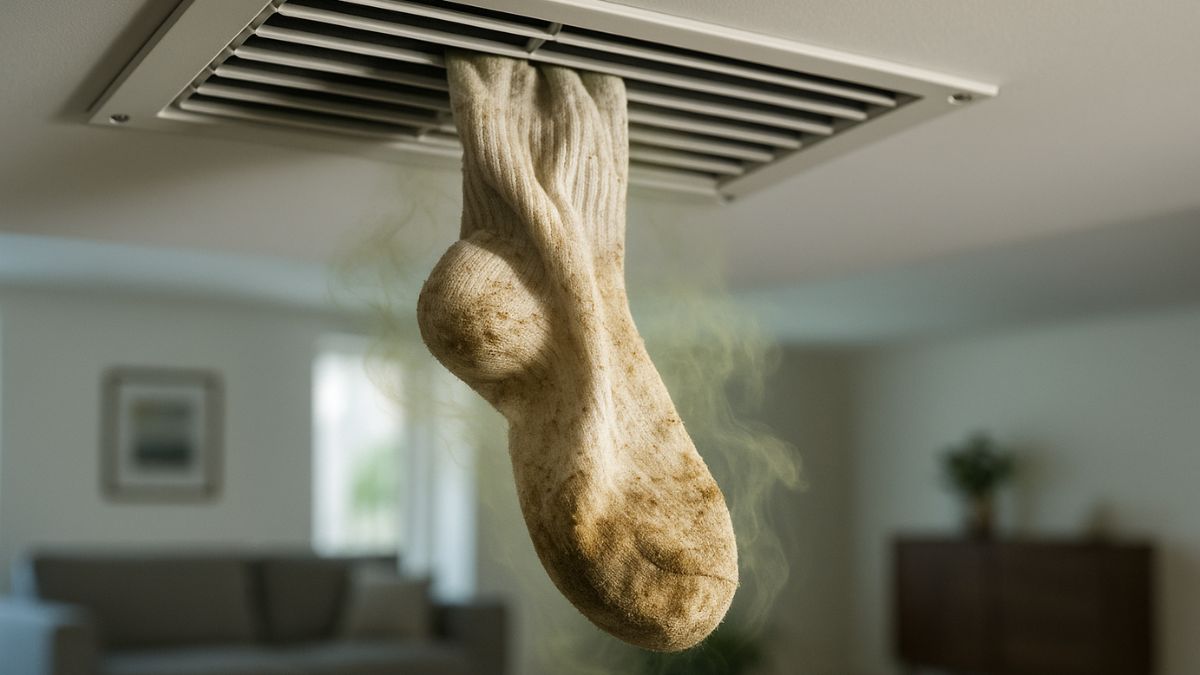
An AC that smells like dirty socks is usually caused by bacteria and mold buildup on the evaporator coil or inside the system, often due to moisture and poor airflow. This condition is commonly called “dirty sock syndrome.” The smell occurs when microbes grow in damp areas and release odor-causing compounds into the air. Cleaning the evaporator coil, replacing filters, and improving drainage and airflow typically solve the problem. Persistent odors may require professional HVAC cleaning.
Why This Smell Should Not Be Ignored?
A foul odor coming from your air conditioner is more than just unpleasant. It often signals microbial growth inside the system, which can affect indoor air quality and potentially trigger allergies or respiratory irritation. Even if the smell seems mild at first, it usually worsens over time as bacteria and mold continue to grow.
Many homeowners assume the smell will go away on its own, especially after turning the system off and on. In reality, the problem tends to return because the root cause remains inside the unit. Understanding what causes the smell and how to fix it will help you restore clean airflow and prevent recurring issues.
What causes an AC to smell like dirty socks?
The dirty sock smell is caused by microbial growth in damp, dark areas inside your AC system.
When warm air passes over the evaporator coil, condensation forms. If this moisture does not drain properly or if airflow is restricted, it creates the perfect environment for bacteria and mold to grow. These microbes release compounds that produce the distinctive musty, sour odor often compared to dirty socks.
This issue is more common in systems that cycle frequently or operate in humid environments. Over time, the buildup becomes more noticeable and harder to ignore. Here are some of the most common causes:
1. Moisture and Mold on the Evaporator Coil
- Your AC coil sits inside the air handler and is constantly exposed to condensation.
- If it isn’t cleaned regularly, mold, mildew, and bacteria grow.
- This is the #1 cause of dirty sock syndrome.
2. Clogged or Dirty Air Filter
- Air filters trap dust, dirt, and allergens.
- When they get clogged, air can’t circulate properly, leaving behind stagnant air and trapped odors.
- Worse, a dirty filter allows moisture and organic debris to collect inside the unit, feeding bacteria.
3. Blocked or Dirty Drain Pan
- The drain pan collects water that drips off the evaporator coil.
- If the pan gets clogged or moldy, that stagnant water starts to smell like old socks.
4. Poor Indoor Air Quality
- If your home has high humidity, or if you cook, smoke, or keep pets indoors, odors can linger in the air.
- The AC then recirculates these smells, amplifying them through the vents.
5. Improperly Sized or Installed Unit
- Units that are too large or too small for your space don’t regulate humidity correctly.
- This creates the damp, musty conditions that trigger mold growth and odors.
What is dirty sock syndrome in HVAC systems?
Dirty sock syndrome is a term used to describe the unpleasant odor caused by microbial growth on AC components, especially the evaporator coil.
This condition often occurs when the system switches between heating and cooling modes, creating temperature changes that encourage condensation. The combination of moisture and organic particles in the air provides a food source for microbes.
Although the name sounds informal, it is a recognized issue in HVAC systems and can affect both residential and commercial units.
Key characteristics:
- Returns repeatedly over time
- Musty or sour smell when AC turns on
- Odor strongest at startup
- Smell fades slightly during operation
Is It Dangerous If My AC Smells?
It is not immediately dangerous, but it can impact indoor air quality and health over time.
Exposure to mold and bacteria in the air can cause symptoms such as sneezing, coughing, headaches, or irritation in sensitive individuals. People with allergies or asthma may be more affected.
While the smell itself is not toxic, it is a sign that your system needs cleaning and maintenance.
Possible effects:
- Reduced indoor air quality
- Allergy symptoms
- Respiratory irritation
- Headaches or discomfort
How to fix an ac that smells like dirty socks
You can eliminate the smell by cleaning the system and removing the source of moisture and bacteria.
Start with simple maintenance steps before moving to more advanced solutions. In many cases, basic cleaning can significantly reduce or eliminate the odor.
For persistent problems, professional cleaning may be necessary.
1. Replace or Clean the Air Filter
- First step: check your air filter.
- Replace disposable filters every 1–3 months.
- Wash reusable filters at least once a month.
- This keeps air flowing freely and prevents odor buildup.
2. Clean the Evaporator Coil
- A technician can deep-clean your AC coils using professional coil cleaners.
- This removes the mold, mildew, and gunk causing the odor.
- In some cases, UV lights are installed near the coil to prevent future bacterial growth.
3. Clear the Drain Pan and Line
- Flush out the drain line with a vinegar solution to kill mold.
- Make sure the drain pan is clean and dry after every cycle.
- If clogged, a professional may need to unclog the line with a wet/dry vacuum.
4. Check for Standing Water
- Inspect around the air handler and ducts for leaks.
- Any standing water creates a breeding ground for bacteria.
5. Improve Indoor Air Quality
- Use a dehumidifier if your home has excess humidity.
- Run ceiling fans to promote air circulation.
- Keep up with routine dusting and vacuuming to reduce airborne particles.
6. Schedule Professional Maintenance
- Have your AC system inspected and cleaned at least once a year.
- Preventative maintenance stops Dirty Sock Syndrome before it starts.
Can a dirty air filter cause this smell?
Yes, a dirty air filter can contribute to the problem by restricting airflow and trapping moisture and debris.
When airflow is reduced, the evaporator coil stays damp longer, increasing the chance of microbial growth. The filter itself can also collect dust and organic material, which can develop odors over time.
Replacing the filter regularly helps maintain proper airflow and reduces the risk of odor buildup.
Why does the smell get worse when the AC first turns on?
The smell is often strongest at startup because air passes over accumulated bacteria and mold before the system stabilizes.
When the AC has been off, moisture can sit on the coil and inside the unit. Once the system starts, it pushes air through these damp areas, releasing the odor into your home.
As the system continues running, airflow may reduce the intensity of the smell, but it does not eliminate the source.
How to prevent your ac from smelling like dirty socks again?
Preventing this issue requires regular maintenance and controlling moisture inside the system.
Keeping your AC clean and ensuring proper drainage are the most effective ways to stop bacteria and mold from growing. Routine maintenance also helps identify potential issues before they become serious.
Prevention tips:
- Replace air filters regularly
- Schedule routine HVAC maintenance
- Keep the drain line clear
- Maintain proper airflow
- Control indoor humidity levels
When should you call a professional?
You should call a professional if the smell persists after basic cleaning and maintenance.
Some issues require specialized tools and expertise, especially when mold growth is extensive or located deep in the system. A technician can perform a thorough cleaning and inspect components that are not easily accessible.
Professional service ensures the problem is fully resolved and reduces the risk of recurrence.
Call a professional if:
- The smell keeps returning
- You suspect mold inside the system
- Basic cleaning does not work
- Airflow issues persist
- You notice unusual system behavior
Frequently asked questions
No, it usually returns because the source remains inside the system.
Basic cleaning is possible, but deeper cleaning may require a professional.
Every 1 to 3 months, depending on usage and environment.
Yes, especially in humid climates and systems with poor maintenance.
Yes, higher humidity levels encourage microbial growth.
Final words
An AC that smells like dirty socks is usually caused by bacteria and mold buildup inside the system. While it is not immediately dangerous, it affects air quality and should be addressed quickly.
Start with basic maintenance such as replacing filters and cleaning components. If the smell persists, consider professional cleaning to fully resolve the issue.