Last Updated on April 30, 2026 by Kravelv Spiegel
Door hardware is one of those details that most people only notice when it’s wrong. A handle that feels cheap, a sliding door that rattles on its track, a hinge that clashes with the room’s finish: these are the small friction points that quietly undermine an otherwise well-considered interior. When hardware is chosen deliberately, it works the other way. The right system makes a space feel complete, intentional, and considerably more elevated than the same room with standard off-the-shelf fittings.
The Shift Toward Concealed and Invisible Hardware
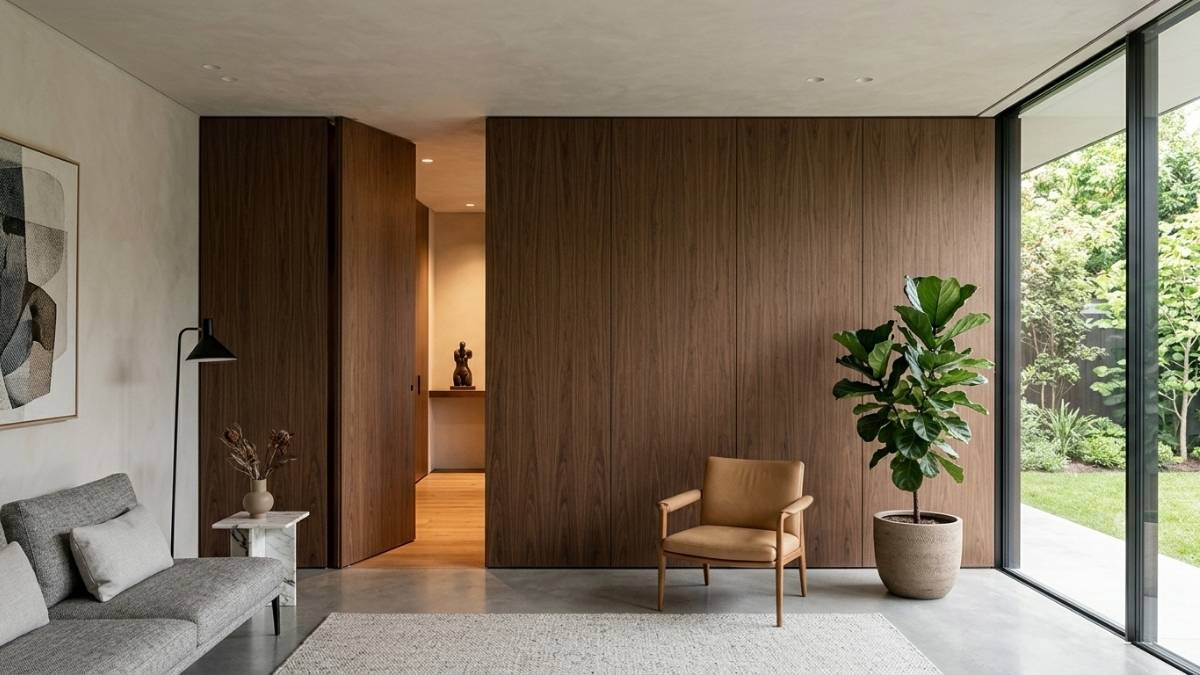
The dominant direction in contemporary interior hardware design is toward less visibility, not more. Where traditional sliding doors announce their mechanism with an exposed overhead track, barn-style rail, and visible rollers, the latest generation of concealed systems hides every functional component inside the door or wall structure, leaving nothing on the surface but the door panel itself.
The effect is significant. A door that appears to float along the wall with no visible means of support creates a visual clarity that aligns with the clean, minimal aesthetic that drives most modern residential and commercial design. The hardware becomes infrastructure rather than decoration, doing its work invisibly while the architecture and interior finishes take center stage.
This approach also simplifies cleaning and maintenance. With no exposed rails to accumulate dust, no visible carriers to wipe down, and no surface hardware that requires polishing, concealed systems are as practical as they are visually refined.
Magic Door Systems: Italian Engineering for Invisible Movement
The Magic 2 concealed sliding system, available through Milcasa, represents the current benchmark for invisible door hardware performance. Engineered and manufactured in Italy by Terno Scorrevoli, the system integrates the entire track mechanism within the wall structure, leaving the door face completely clean. The result is a sliding door with no visible hardware on the wall, no exposed overhead rail, and no surface-mounted components of any kind.
The Magic 2 handles wood doors up to 176 lbs and incorporates soft-close dampers with more than 50mm of braking motion, ensuring smooth, controlled deceleration at both the open and closed positions. A frame variant accommodates glass panels, and the Uni Equal model eliminates the need for additional milling in the door, simplifying installation without compromising the concealed aesthetic.
For architects, interior designers, and homeowners working toward a minimalist or high-end contemporary look, the Magic 2 delivers the hardware performance that the aesthetic requires without the visible compromise that standard systems involve.
Folding and Accordion Hardware: Flexible Space Solutions
Where concealed sliding systems serve rooms that need clean division with minimal visual intrusion, folding and accordion door hardware addresses a different spatial problem: how to separate or connect larger areas fluidly without committing to a fixed wall or a standard swing door.
Accordion and folding door systems allow a single opening to serve as a passthrough, a room divider, or a closed barrier depending on the moment, making them particularly valuable in open-plan living spaces, home offices that double as guest rooms, and commercial environments where flexible floor plans serve different functions across different times of day.
Milcasa’s folding door hardware range is designed to accommodate multiple leaves, with the option to combine pivot joints and hinges for a customized configuration. The system covers barn doors, bifold doors, closet doors, accordion doors, and glass wall applications, with hardware engineered to meet performance standards across both residential and commercial use cases.
The key advantage over standard consumer-grade folding hardware is structural: heavier-gauge components, smoother carriage movement, and alignment adjustability that maintains consistent operation over time rather than developing the sagging and sticking that cheaper systems produce after the first year of use.
Finish, Material, and the Coherence Question
Hardware finish is where the detail work of a well-designed interior either comes together or falls apart. Matte black, satin brass, brushed nickel, and polished chrome all read differently in context, and the coherence of a space depends on hardware choices that align with the room’s broader material palette rather than treating each fitting as an isolated decision.
Whether you’re searching for refined interior door hardware that elevates every room it appears in, ready to explore the Magic Door concealed sliding systems that make hardware invisible and spaces feel complete, or need flexible accordion door hardware that adapts your floor plan to how you actually live and work, Milcasa has the solution engineered to perform and designed to impress. Explore the full collection today.