Last Updated on May 15, 2026 by Kravelv Spiegel
Many homeowners assume an air conditioner repair starts with a bad part. The unit stops cooling well, so they expect a technician to find a failed capacitor, a weak motor, a dirty sensor, or some other single item that needs replacing. Sometimes that does happen. Still, many AC problems do not begin with one broken part. They begin with airflow.
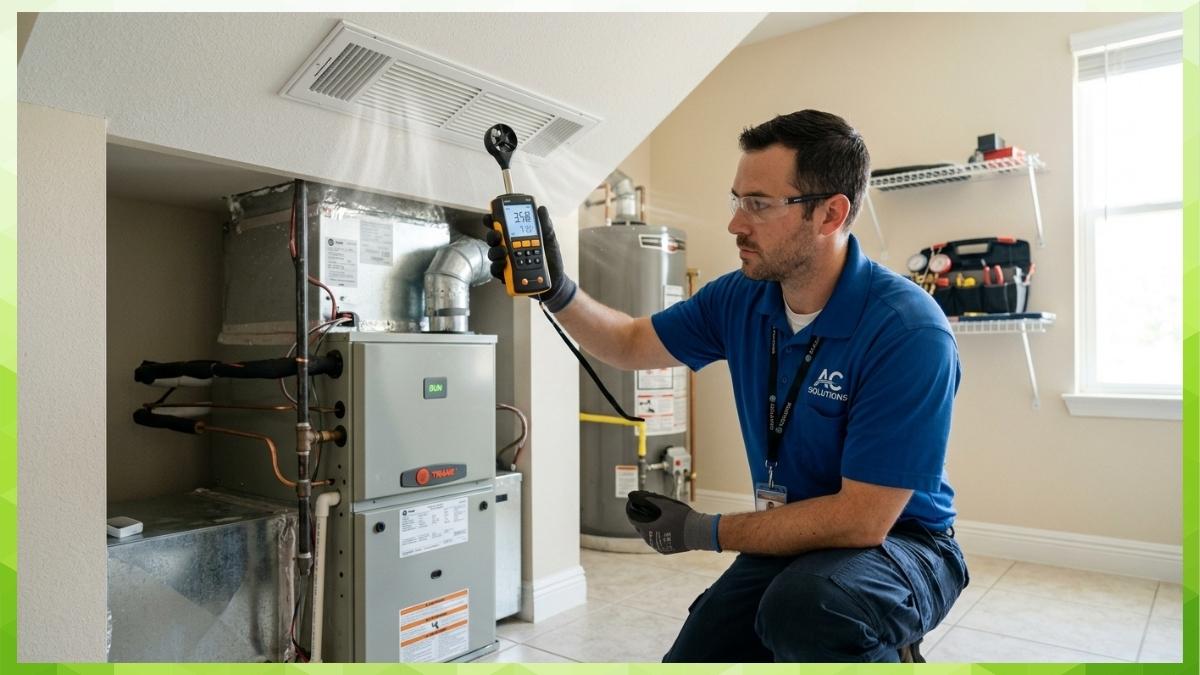
That is why good AC repair often starts with airflow testing before anyone decides what part to replace. Airflow affects how the whole system works. It shapes how the air conditioner cools, how long it runs, how evenly it handles rooms, and how much stress it places on important components. If airflow is weak, restricted, or unbalanced, the system can show symptoms that look like part failure even when the deeper issue sits elsewhere.
This matters because replacing a part without checking airflow can lead to short term relief instead of a lasting fix. The AC may start working again for a while, but the same complaint often returns because the real problem never left.
Understanding why airflow testing comes first helps homeowners see the repair more completely. It also explains why the best repair visits often involve more than swapping one item and leaving.
Airflow Is Part of the Cooling Process, Not a Separate Issue
An air conditioner does not cool a home through refrigerant and electrical parts alone. It also needs enough air moving across the indoor system and through the ductwork to carry that cooling into the home. If that air does not move the way it should, the entire cooling process loses balance.
That means airflow affects:
- How much heat the system can remove
- How quickly rooms cool down
- How well the thermostat setting matches the home feel
- How hard the blower has to work
- How much strain builds across the system
A system with airflow trouble can still turn on and still blow cool air. That is what makes the problem easy to misunderstand. The homeowner may feel some cool air and assume the issue must be a single worn out part. In reality, the air conditioner may be struggling because it cannot move enough air to do its job properly.
Weak Airflow Can Look Like a Mechanical Failure
One reason airflow testing matters is that poor airflow can mimic many other AC problems. It can make the system seem underpowered, uneven, slow, noisy, or unstable. That can point attention toward a part replacement when airflow should be the first thing checked.
Weak airflow can cause symptoms such as:
- Warm rooms even while the system runs
- Long cooling cycles
- Frozen indoor coil conditions
- Weak air at the vents
- Short cycling in some cases
- Uneven temperature between rooms
- Excessive strain on indoor components
These symptoms may tempt someone to blame the thermostat, blower motor, or another part right away. Yet if a dirty filter, blocked return, closed vent, crushed duct, or dirty blower wheel is behind the problem, replacing a part alone will not solve it well.
The System Needs the Right Amount of Air, Not Just Any Air
Airflow testing is not just about asking whether air is coming out of the vents. Air can be moving and still be wrong for the system. The system needs the right volume and distribution of air to operate as intended.
That is why airflow testing helps answer questions such as:
- Is the system moving enough air through the indoor section?
- Is one room getting too much while another gets too little?
- Is return air getting back to the system properly?
- Is the blower working against too much restriction?
- Is the duct system helping or hurting performance?
Without these answers, part replacement can become guesswork. A unit may have a stressed component because airflow problems pushed it too hard for too long. Replacing the stressed part without addressing airflow leaves the same pressure in place.
Dirty Filters Are Only the Beginning
A lot of people know that dirty filters affect airflow. That is true, but filters are only one part of the picture. Airflow testing matters because restriction can happen in many places, not just at the filter slot.
Other common airflow trouble spots include:
- Return grilles blocked by furniture
- Supply vents closed or obstructed
- Dirty blower parts
- Duct sections that have shifted or collapsed
- Leaks that reduce air delivery to rooms
- Dirty indoor coil surfaces
- Poor return air design in closed rooms
A repair visit that checks airflow can uncover these hidden conditions. That matters because the system may be struggling with several small restrictions at once. No single part replacement will fix that kind of pattern unless the airflow side gets addressed, too.
Frozen Coil Problems Often Begin With Airflow Issues
One of the clearest examples of why airflow testing matters is a frozen coil. Homeowners may notice weak cooling, ice buildup, or a system that seems to stop working properly after running for a while. It might be tempting to assume the issue is one failed part. Often, airflow is one of the first things that needs to be checked.
Low airflow can allow the indoor section to get too cold because not enough warm indoor air passes across it. Once that happens, moisture can freeze and performance drops quickly. The system may still try to run, but cooling becomes weaker and less stable.
A repair that starts by replacing a part without checking airflow can miss the real reason the freezing started. That is why airflow testing often comes first. It helps reveal whether the system is getting the air movement it needs to stay stable.
Room Complaints Often Point Back to Airflow
Many AC repair calls begin with comfort complaints, not obvious equipment failure. A homeowner may say:
- One room stays warm
- The hallway feels cooler than the bedroom
- The AC runs but the house never feels settled
- The back rooms do not cool well
- The air feels weak at certain vents
These are airflow clues. The system may have a mechanical issue too, but room comfort patterns often start with how air is moving through the house. A good repair approach checks that movement before deciding what part deserves the blame.
This matters because part replacement alone may leave the comfort complaint in place. The AC may run again, but the bedroom stays warm because the duct path, return side, or airflow balance was never corrected.
Blower Performance Cannot Be Judged by Sound Alone
Homeowners often notice airflow problems through sound. They hear the system turn on but the vents sound weaker than before. Other times, the blower sounds active, yet the rooms still do not cool well. This is another reason airflow testing is so important.
A blower can sound normal and still underperform because:
- Dirt has collected on the wheel
- Restriction is making it work harder
- Duct conditions are reducing delivery
- Return air is limited
- The system is no longer moving air evenly
Without testing airflow, it is easy to misread the situation. Someone may focus on whether the blower turns on instead of whether it is actually moving the right amount of air through the home.
Part Failure Can Be a Result of Airflow Stress
Sometimes a part really does need replacement, but airflow still comes first because poor airflow may have helped create the failure. A blower motor, electrical control, or other working part can wear faster when the system fights restriction for long periods.
That means a repair visit should often ask two questions instead of one:
- What part is failing right now?
- What operating condition helped push that part toward failure?
Airflow testing helps answer the second question. That is important because replacing the failed part without correcting the stress behind it raises the chance of another breakdown later.
Airflow Problems Change Thermostat Behavior Too
A thermostat cannot control comfort accurately if airflow through the house is uneven. The hallway may cool quickly while the bedrooms stay warm. The thermostat may shut the system off because its location feels fine, even though the rooms people use most are still uncomfortable.
This often leads homeowners to think the thermostat is bad or the AC lacks power. Sometimes the issue is really airflow. The system may not be delivering enough conditioned air to certain rooms, or return airflow may be poor enough that circulation stays incomplete.
Airflow testing helps separate thermostat problems from distribution problems. That keeps repairs more accurate and helps avoid replacing controls when the comfort issue really sits in the air path.
Duct Conditions Matter More Than Many People Realize
The duct system is a major part of AC performance. Even a healthy indoor and outdoor unit can struggle if the duct pathways are dirty, leaky, restricted, or poorly balanced. That is another reason airflow testing often comes first.
Duct related problems can cause:
- Weak air in far rooms
- Cooling that seems fine in the hallway but not in bedrooms
- Long run times
- Poor comfort after the system cycles off
- Uneven temperatures across the house
If a repair visit ignores the duct side of the system, the homeowner may end up with a working unit attached to an underperforming air delivery system. That rarely feels like a full solution.
Good Repairs Aim for Stability, Not Just Restarting
A quick restart is not always the same as a strong repair. Many homeowners have experienced a service call where the system begins running again but the same complaint returns soon after. Airflow testing helps reduce that risk because it looks beyond whether the unit simply comes back on.
A more stable repair asks:
- Is the cooling process balanced?
- Is air moving the way it should?
- Is the system under unnecessary strain?
- Will the home actually feel better after this repair?
That kind of thinking leads to longer lasting repair results. It also gives the homeowner a clearer explanation of why the problem happened in the first place.
Airflow Testing Helps Identify the Real Root Cause
One of the biggest goals in AC repair is finding the root cause, not just the immediate symptom. Airflow testing supports that goal because so many cooling complaints connect back to how air moves through the system.
For example:
- A frozen coil may trace back to weak airflow
- A warm room may trace back to a return problem
- A stressed motor may trace back to heavy restriction
- A system that feels inaccurate may trace back to duct imbalance
- A repeat repair issue may trace back to airflow stress that never got corrected
Without airflow testing, these deeper causes are easier to miss. That can leave the homeowner with repeated discomfort, repeated service calls, or repairs that do not feel complete.
Homeowners Benefit From a Bigger Picture
Understanding airflow helps homeowners ask better questions about repair. It shows that the air conditioner is a full system, not just a collection of replaceable parts. It also explains why a thorough technician may spend time checking filters, vents, returns, blower conditions, and duct behavior before deciding what to replace.
That is not wasted time. It is part of making sure the repair fits the real problem.
A homeowner who knows this can better understand why:
- The system may have more than one issue
- A part failure may not be the full story
- Comfort complaints often trace back to airflow
- The best repair is the one that improves how the home actually feels
Better AC Repair Starts With Better Air Movement
Air conditioning repairs often start with airflow testing because airflow affects everything the system is trying to do. The AC cannot cool well, balance rooms well, or run with good stability if the air path is weak, restricted, or uneven.
A part may still need to be replaced. That happens often. The point is that the best repair work usually checks airflow first, so the replacement actually solves something lasting. Otherwise, the system may keep fighting the same hidden problem with a new part in place.
That is why airflow testing matters so much. It helps connect the equipment to the comfort complaint. It helps explain why the home feels the way it does. Most importantly, it helps turn AC repair into a more complete fix instead of a temporary reset.