Last Updated on April 26, 2026 by Kravelv Spiegel
💡Key Takeaways:
To de-ice your roof safely, remove snow with a roof rake, melt ice using calcium chloride (not rock salt), and avoid chipping or climbing on the roof whenever possible. Most roof ice problems are caused by ice dams, which form when melted snow refreezes at the edges. The safest approach is to clear snow early, create drainage channels in ice, and reduce attic heat and humidity. If ice buildup is severe, professional removal is the safest option.
Why Roof De-Icing Matters
Roof ice isn’t just a winter inconvenience—it’s a structural risk. Ice buildup, especially ice dams, can trap water on your roof and force it under shingles, leading to leaks, mold, and interior damage. Over time, repeated freezing and thawing can weaken roofing materials and gutters, increasing repair costs significantly.
This issue affects homeowners in cold climates the most, but even moderate winters can create the right conditions for ice dams. By understanding how de-icing works and how to do it safely, you can prevent costly repairs and extend the lifespan of your roof. This guide walks you through step-by-step methods, what to avoid, and how to stop ice from coming back.
What causes ice buildup on a roof?
Ice buildup is primarily caused by heat escaping from your home, which melts snow that later refreezes at colder roof edges.
When warm air rises into the attic, it heats the roof surface unevenly. Snow melts in warmer areas and flows downward. Once it reaches the colder eaves, it refreezes and forms an ice dam. Over time, this creates a barrier that traps water behind it.
This trapped water has nowhere to go except under your shingles, which can lead to leaks and internal damage.
Common causes of roof ice:
- Poor attic insulation
- Inadequate ventilation
- Heat escaping from the home
- Clogged gutters
- Fluctuating temperatures
What is the safest way to de-ice your roof?
The safest way to de-ice your roof is to remove snow from the ground and use gentle melting methods instead of force.
Climbing onto an icy roof is dangerous and often unnecessary. Instead, use tools designed for safe, ground-level work. The goal is to reduce snow buildup and create pathways for trapped water to drain.
Aggressive methods like chopping ice can damage shingles and create more problems than they solve.
Safe de-icing methods:
- Use a roof rake to remove snow
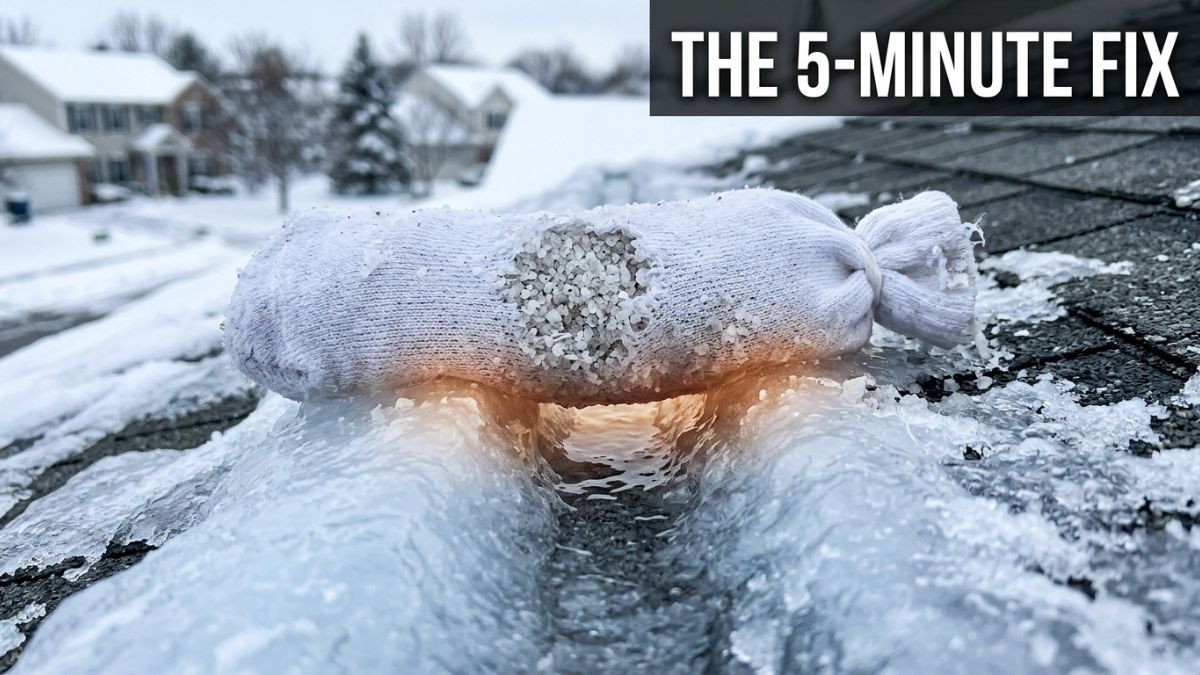
- Apply calcium chloride in socks or tubes
- Use heated cables for prevention
- Call professionals for severe ice dams
How do you remove snow from your roof properly?
You should remove snow using a roof rake while standing safely on the ground.
A roof rake has a long handle that allows you to pull snow off the edges of your roof without climbing. Start from the edge and work upward slightly, but avoid scraping directly against shingles.
Removing snow reduces the amount of meltwater that can refreeze into ice dams.
Best practices:
- Clear the first 3–4 feet from the roof edge
- Work in small sections
- Avoid pulling too aggressively
- Use plastic or aluminum rakes (not metal blades)
How do you melt ice on your roof safely?
The safest way to melt roof ice is by using calcium chloride to create drainage channels through the ice.
Place calcium chloride pellets inside a sock or nylon stocking and lay it across the ice dam. This creates a channel that allows trapped water to flow off the roof instead of backing up.
Avoid using rock salt or harsh chemicals, as they can damage shingles, gutters, and nearby landscaping.
Safe melting methods:
- Calcium chloride “ice melt socks”
- Warm water (only in controlled situations)
- Heated cables for long-term use
What should you never do when de-icing a roof?
You should never chip ice, use open flames, or apply corrosive chemicals to your roof.
These methods may seem effective in the short term but can cause permanent damage. Chipping ice can crack shingles, while heat sources can warp materials or create safety hazards.
Even some chemical de-icers can weaken roofing materials if used incorrectly.
Avoid these mistakes:
- Hitting ice with tools or hammers
- Using rock salt or sodium chloride
- Pouring boiling water on the roof
- Climbing onto an icy roof without safety gear
How long does it take to de-ice a roof?
De-icing a roof can take anywhere from a few hours to a full day, depending on the severity of the ice buildup.
Simple cases, where only light snow removal is needed, can be resolved quickly. More severe ice dams may take longer, especially if you’re using melting methods that work gradually.
Professional removal is faster but may require scheduling.
Estimated time:
- Light snow removal: 30–60 minutes
- Moderate ice melting: 2–4 hours
- Severe ice dams: several hours to a full day
When should you call a professional?
You should call a professional if the ice buildup is thick, widespread, or causing leaks inside your home.
Large ice dams can be dangerous to remove without proper equipment. Professionals use steam or specialized tools to safely remove ice without damaging your roof.
If you notice water stains on ceilings or walls, it’s a sign the problem has already escalated.
Call a professional if:
- Ice dams are several inches thick
- You see interior leaks
- The roof is steep or hard to access
- DIY methods aren’t working
How can you prevent ice from forming again?
Preventing ice buildup requires fixing the underlying heat and ventilation issues in your home.
The goal is to keep your roof at the same temperature as the outside air. This prevents uneven melting and refreezing.
Improving insulation and airflow is the most effective long-term solution.
Prevention strategies:
- Improve attic insulation
- Seal air leaks in ceilings and attic
- Increase ventilation
- Keep gutters clean
- Install heated roof cables
Data and Statistics on Roof Ice Damage
Ice dams are one of the most common winter roofing problems. They are considered one of the most prevalent and costly roof issues for homeowners, according to Warmzone (2024).
Additionally, ice buildup can lead to water infiltration and structural damage if not addressed, according to CAA-Quebec (2026), highlighting the seriousness of the issue.
Experts also emphasize that improper insulation and ventilation are the leading causes of ice dams, reinforcing that prevention—not just removal—is key.
It’s not recommended. Hot water can refreeze quickly and create more ice.
No, it’s dangerous and increases the risk of injury and roof damage.
Calcium chloride is the safest and most effective option.
Look for thick ice at roof edges, icicles, or water stains inside your home.
Yes, they help prevent ice buildup by keeping key areas warm.
Yes, trapped water can seep under shingles and enter your home.
After heavy snowfall, especially if temperatures fluctuate.
No, it’s a temporary fix. Long-term prevention requires insulation and ventilation improvements.
Final words
De-icing your roof is about removing snow early, melting ice safely, and preventing buildup from returning. The most effective approach combines immediate action with long-term fixes like better insulation and ventilation.
Start by using a roof rake and safe melting methods. If the problem keeps coming back, focus on improving your attic’s insulation and airflow.