Last Updated on May 27, 2026 by Kravelv Spiegel
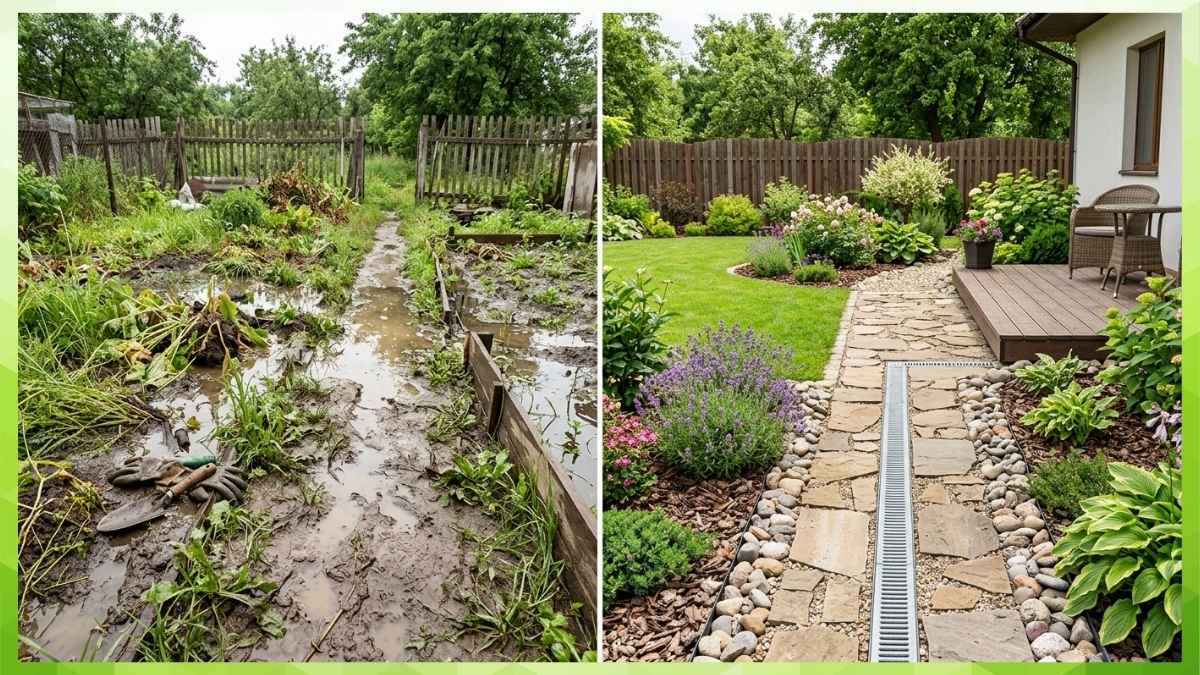
The best garden drainage solutions include French drains, dry creek beds, channel drains, gravel trenches, rain gardens, and proper soil grading. The right option depends on your yard’s slope, soil type, and how much water collects after rain. Effective drainage prevents root rot, standing water, soil erosion, and foundation damage while keeping your landscape healthier and easier to maintain. Most homeowners get the best results by combining multiple drainage methods instead of relying on a single fix.
Why Garden Drainage Matters?
Poor garden drainage is one of the most overlooked causes of landscape damage. When water cannot properly flow away from soil, it builds up in low areas and creates long-term structural and plant health problems. This issue is especially common in yards with clay soil, flat terrain, or compacted ground.
Excess water does more than create muddy patches. It weakens plant roots, increases fungal growth, and can gradually erode soil structure. Over time, standing water can also affect patios, retaining walls, and even the foundation of nearby structures. This makes drainage not only a landscaping concern but also a property protection issue.
A well-designed drainage system helps balance water distribution, improves soil conditions, and reduces maintenance needs. It also ensures that heavy rainfall does not permanently damage your outdoor space.
What causes poor drainage in gardens?
Garden drainage problems occur when water cannot move through soil or away from the surface efficiently. This typically happens due to a combination of soil type, landscape shape, and environmental conditions.
Clay-heavy soil is one of the most common causes because it holds water tightly and drains slowly. Flat yards also contribute to pooling since there is no natural slope to guide water away. In some cases, overwatering or blocked gutters worsen the issue by introducing more water than the soil can absorb.
Other common causes include:
- Soil compaction from foot traffic or construction
- Poor yard grading or uneven surface levels
- Lack of organic matter in soil
- Improper irrigation systems
- Blocked drainage channels or downspouts
Understanding the root cause is essential before choosing a drainage solution, because different problems require different fixes.
What are the best garden drainage solutions available today?
The best garden drainage solutions are systems designed to either redirect water, absorb it naturally, or improve soil permeability. There is no single universal solution, so combining methods often produces the best results.
French drains are widely used for underground water control because they move excess moisture away from saturated areas using gravel and perforated pipes. Dry creek beds manage surface water by guiding it through decorative stone channels that also prevent erosion. Rain gardens provide a natural solution by absorbing runoff through deep-rooted plants and specially designed soil beds.
Other effective options include:
- Channel drains for paved surfaces
- Gravel trenches for localized pooling
- Catch basins for heavy runoff collection
- Soil aeration and compost improvement
- Raised beds for poorly draining soil
Each system serves a specific purpose, and the right combination depends on your yard’s layout and water behavior.
How does a French drain solve garden drainage problems?
A French drain solves drainage issues by collecting underground water and redirecting it away from saturated soil areas through a gravel-filled trench and perforated pipe system.
Water naturally flows into the trench because gravel provides a path of least resistance compared to compacted soil. Once inside, the pipe channels water toward a safer discharge point such as a dry well or drainage ditch.
French drains are highly effective for persistent water problems such as:
- Constantly wet lawn areas
- Water pooling near foundations
- Saturated garden beds
- Sloped yards with heavy runoff
Proper slope is essential. Without correct grading, water may not flow efficiently and could remain trapped in the system.
Are dry creek beds only decorative or do they actually work?
Dry creek beds are both decorative and functional. They work by directing surface water through a rock-lined channel that slows flow and prevents erosion while guiding runoff safely across the yard.
Unlike underground systems, dry creek beds remain visible and become part of the landscape design. During dry weather, they look like natural stone features, but during rainfall, they act as controlled drainage paths.
They are especially useful for:
- Sloped yards with visible runoff paths
- Areas prone to erosion
- Garden spaces that need both function and design appeal
A properly constructed dry creek bed typically includes layered stone sizes and landscape fabric to maintain structure and prevent soil mixing.
How do rain gardens improve natural drainage?
Rain gardens improve drainage by capturing stormwater and allowing it to slowly absorb into the ground through specially selected plants and soil layers.
These gardens are built in shallow depressions that temporarily hold water after rainfall. The plants used in rain gardens are typically native species that tolerate both wet and dry conditions.
Rain gardens help reduce runoff while also improving environmental quality by filtering pollutants before water reaches storm systems.
Key benefits include:
- Reduced surface flooding
- Improved groundwater recharge
- Lower soil erosion risk
- Enhanced biodiversity support
They are most effective when placed near downspouts or low yard areas.
Can gravel alone fix garden drainage issues?
Gravel can improve drainage, but it is not a complete solution by itself. It works best when used as part of a structured system such as a trench or layered drainage base.
Gravel creates air pockets that allow water to move more freely, but if the underlying soil is heavily compacted, water will still struggle to drain properly.
Effective uses of gravel include:
- French drain systems
- Drainage trenches
- Pathway bases
- Raised garden bed foundations
The key is proper installation. Without correct layering, gravel may only provide temporary relief.
How do you fix drainage problems in clay soil?
Fixing drainage in clay soil requires improving both soil structure and water movement. Clay particles are tightly packed, which makes it difficult for water to pass through.
One of the most effective long-term solutions is adding organic matter such as compost. This helps loosen the soil and improve aeration. However, in severe cases, physical drainage systems are also necessary.
Practical solutions include:
- Adding compost regularly to improve structure
- Installing French drains in problem areas
- Using raised beds for planting zones
- Aerating compacted soil
- Redirecting runoff away from clay-heavy zones
Clay soil rarely improves on its own, so combining methods is often required.
Should you install garden drainage yourself or hire a professional?
The decision depends on the severity of the drainage problem and the type of system being installed. Simple solutions like gravel trenches or soil improvement can often be done without professional help.
However, more complex systems such as French drains or large-scale yard regrading require precise planning. Improper installation can worsen water flow and potentially direct water toward structures instead of away from them.
DIY is suitable for:
- Small wet patches
- Basic gravel drainage
- Minor slope adjustments
Professional help is recommended for:
- Persistent flooding
- Foundation water issues
- Large drainage systems
- Multi-zone landscape grading
What are the most common garden drainage mistakes?
Many drainage failures happen due to poor planning rather than incorrect materials. One of the most common mistakes is treating symptoms instead of addressing the actual source of water accumulation.
Another major issue is improper slope design. Drainage systems rely on gravity, and even a small grading error can stop water from flowing correctly.
Common mistakes include:
- Ignoring soil type before installation
- Installing drains without slope calculation
- Directing water toward structures
- Using undersized drainage pipes
- Skipping maintenance after installation
Avoiding these mistakes significantly improves system performance and lifespan.
Frequently Asked Questions
Improving soil with compost and creating shallow gravel channels are the simplest starting points.
Standing water after rain, soggy soil, and dying plants are common signs.
They work in most soils but require proper installation to be effective in clay-heavy areas.
They begin functioning immediately after installation but improve over time as plants establish.
Yes, long-term water exposure can weaken soil stability around foundations.
Gravel helps but is usually not sufficient without proper drainage structure.
Final words
The best garden drainage solutions combine water redirection, soil improvement, and surface runoff control. French drains, dry creek beds, and rain gardens each solve different types of drainage problems, and using them together creates the most reliable system.
Start by identifying where water collects and how it moves through your yard. From there, choose solutions that match your soil conditions and landscape design. With the right setup, you can prevent water damage, improve plant health, and maintain a cleaner, more functional outdoor space.