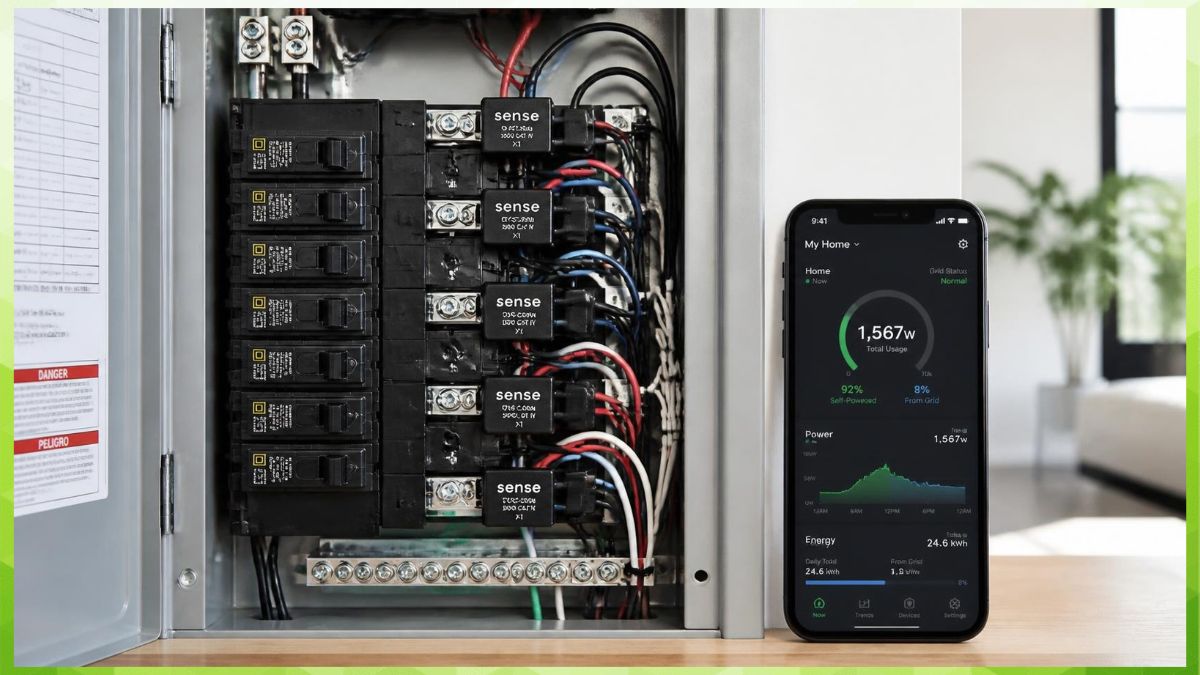
Last Updated on October 10, 2026 by Kravelv Spiegel
The best devices for monitoring home electricity usage are plug-in meters like the Kill A Watt P4400 for single appliances, smart plugs like the Kasa KP115 for room-by-room tracking, and whole-home monitors like the Emporia Vue Gen 3 and Sense Home Energy Monitor for full-panel visibility. Plug-in meters and smart plugs cost under $30 and need no installation. Whole-home monitors cost $150 to $300 and typically require access to your electrical panel. All of the devices covered here are currently sold on Amazon.
Why This Matters
Electricity costs have climbed steadily for most US households, and heating, cooling, and large appliances quietly account for the biggest share of that bill. Without a way to see actual usage in real time, homeowners are left guessing which devices are driving costs up, which makes it hard to cut spending without guessing or making uncomfortable sacrifices like running the AC less. Renters, homeowners, and anyone managing a household budget can benefit from knowing exactly where electricity is going.
This guide covers the main categories of electricity monitoring devices, how they differ in setup and detail level, and specific products available on Amazon in each category. By the end, you will know which type of monitor fits your situation, whether that means checking a single appliance or tracking your entire home’s electrical panel.
What Types of Electricity Monitors Are Available?
There are three main categories of electricity monitoring devices: plug-in meters for single appliances, smart plugs with built-in monitoring, and whole-home monitors installed at the electrical panel.
Plug-in meters sit between an appliance and the wall outlet and display real-time wattage and cumulative kilowatt-hours on a small screen. They require no app, no Wi-Fi, and no installation beyond plugging them in, which makes them the simplest way to check a single device’s power draw. Smart plugs do a similar job but add Wi-Fi connectivity, letting you view usage data, set schedules, and receive alerts from a phone app rather than reading a screen directly on the plug.
Whole-home monitors take a different approach. Instead of measuring one outlet at a time, they use current transformer (CT) clamps installed inside your breaker panel to measure the electricity flowing to your entire home, or to individual circuits if you add extra sensors. This gives a complete picture of household energy use but generally requires opening the electrical panel, either yourself or with an electrician.
Main categories at a glance:
- Plug-in meters: single-appliance readings, no app required
- Smart plugs: app-based tracking, scheduling, and voice assistant support
- Whole-home monitors: panel-level tracking of total or circuit-by-circuit usage
- Circuit-level add-ons: optional sensors that extend whole-home monitors to specific circuits
What Is the Best Plug-In Meter for Checking a Single Appliance?
The Kill A Watt P4400 is the most widely used plug-in electricity meter and a reliable choice for checking exactly what a single appliance costs to run.
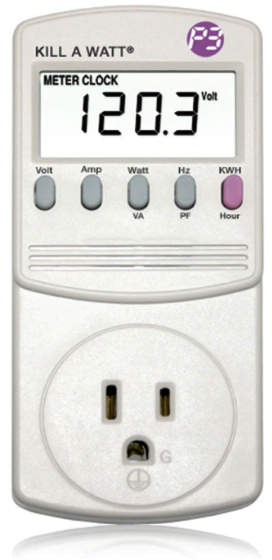
Key features:
- Real-time wattage, voltage, and kWh readings
- No app, subscription, or Wi-Fi required
- Tracks usage by day, week, month, or year
- Good for checking refrigerators, space heaters, and other single high-draw devices
- Rated for 115V household outlets up to 15 amps
This device has been a standard recommendation for over a decade because it does one job well: plug it into an outlet, plug your appliance into it, and read the wattage, voltage, and cumulative kilowatt-hour usage directly off its LCD screen. It also tracks line frequency and power factor, which can help identify an aging appliance that is drawing more power than it should. It is available on Amazon and typically priced under $30.
What Is the Best Smart Plug for Room-by-Room Monitoring?
The Kasa Smart Plug with Energy Monitoring (KP115) is a strong choice for tracking usage on specific devices from a phone app, without needing to read a display in person.
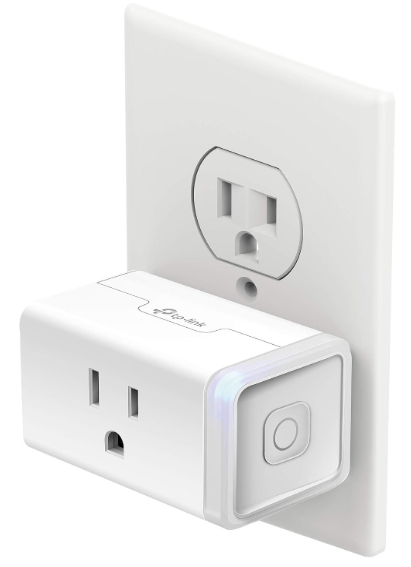
Key features:
- Real-time power monitoring through a mobile app
- Historical usage data and monthly reports
- Works with Alexa and Google Home, no hub needed
- ETL certified, rated up to 15 amps
- Useful for lamps, space heaters, and small appliances plugged into a standard outlet
Unlike a basic plug-in meter, this smart plug connects to Wi-Fi and reports real-time wattage and historical kWh data through the Kasa app, so you can check usage remotely rather than walking over to read a screen. It supports Alexa and Google Home, works without a separate hub, and is ETL certified for safety. It is sold on Amazon individually or in multi-packs, and reviewers commonly note the app’s clear layout and reliable scheduling features.
What Is the Best Whole-Home Energy Monitor for Most Households?
The Emporia Vue Gen 3 is the best value whole-home energy monitor for most households because it tracks total electricity use out of the box and can expand to individual circuits with additional sensors.
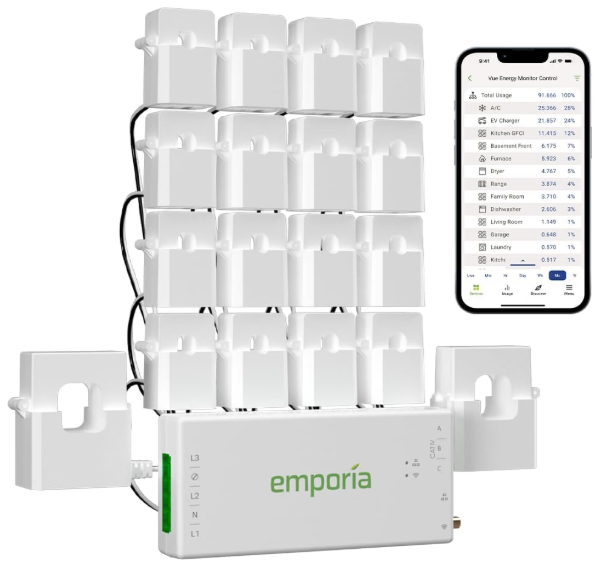
Key features:
- Whole-home monitoring from a single base unit
- Expandable to up to 16 individual circuits with add-on sensors
- Free app with hourly, daily, and monthly usage breakdowns
- No subscription fees
- Budget-friendly compared to other whole-home systems
The base unit clamps onto your home’s main electrical feeds and reports real-time and historical energy use through Emporia’s free app, with no subscription fee. Adding optional circuit-level sensors, sold separately, lets you label individual circuits such as “kitchen,” “dryer,” or “HVAC” for a detailed breakdown of where electricity is going. Installation typically takes 30 to 45 minutes and can be done by a confident DIYer, though opening an electrical panel always carries some risk and hiring an electrician is a reasonable choice for anyone unsure. It is available on Amazon, generally priced around $150 for the base kit.
What is The Best for Three-Phase Monitoring?
The Shelly Pro 3EM is intended for more advanced electrical monitoring, particularly where three-phase electrical systems need to be monitored. It uses three current transformers to measure the electrical system and provides detailed energy information.
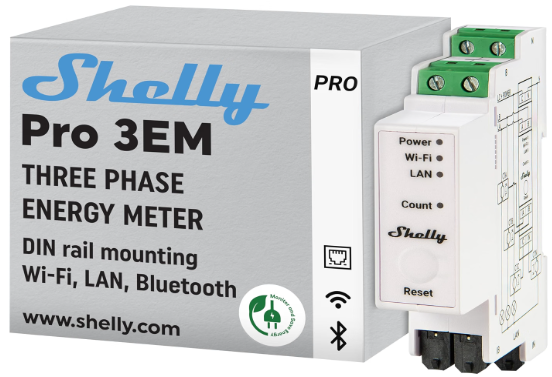
Key features:
- Three-phase energy monitoring
- Three-channel measurement
- Wi-Fi connectivity
- LAN/Ethernet connectivity
- DIN-rail installation
- Real-time power monitoring
- Energy consumption tracking
- Suitable for more complex electrical systems
- Smart-home integration capabilities
This is more equipment than most homeowners need for simply checking an appliance. However, it can make sense for larger properties, workshops, businesses, or homes with more complicated electrical systems.
What Mistakes Should You Avoid When Choosing an Electricity Monitor?
The most common mistakes are buying a whole-home monitor when a simple plug-in meter would answer the question, ignoring panel compatibility before purchase, and assuming a higher price always means more accurate data.
Many people reach for an expensive whole-home system when they really want to know the cost of running one specific appliance, like an old refrigerator or a space heater. A $25 plug-in meter answers that question directly, while a $300 whole-home monitor answers a much broader question that may not be what the buyer actually needed. Going the other direction, relying only on smart plugs to estimate whole-home usage misses everything not plugged into one, including HVAC systems and hardwired appliances.
Panel compatibility is another common oversight. Whole-home monitors use CT clamps sized for specific amperage and wire configurations, and some older panels or unusual setups may need extra components or professional installation. Checking your panel type and amperage against the product’s listed compatibility before buying avoids a return or an install that does not fit.
FAQ
A plug-in meter like the Kill A Watt displays readings directly on its own screen with no app or Wi-Fi needed. A smart plug connects to Wi-Fi and sends usage data to a phone app, and usually adds scheduling and voice assistant support.
It depends on your comfort level and local electrical code. Some homeowners install units like the Emporia Vue themselves, but working inside a breaker panel always carries risk, and manufacturers like Sense specifically recommend professional installation.
No. Smart plugs only measure what is plugged into them, so they miss hardwired appliances like HVAC systems, electric ranges, and water heaters. A whole-home monitor is needed to see total household usage.
Savings vary by household, but tracking usage commonly helps people reduce consumption by identifying wasteful habits or failing appliances. The device itself does not save money directly; it only provides the information needed to make changes.
Yes, for typical household appliances it provides reliable wattage and kWh readings. It is not a laboratory-grade instrument, but it is accurate enough to compare appliances or estimate real running costs.
Some do. Devices like the Sense Solar model and certain Emporia configurations can track solar production alongside consumption, showing net energy use. Confirm solar compatibility before buying if this matters to you.
No. These devices draw a negligible amount of power themselves and do not add any meaningful cost to your bill. Their purpose is to help you reduce usage elsewhere, not add to it.
Yes. The Kill A Watt P4400, Kasa KP115, Emporia Vue Gen 3, and Shelly Pro 3EM are all currently listed and sold on Amazon as of this writing, though prices and stock can change over time.
Final words
Choosing the right electricity monitor comes down to matching the device to the question you actually want answered. A plug-in meter or smart plug is enough to check a single appliance, while a whole-home monitor is worth the higher cost and installation effort if you want a complete picture of where your electricity goes.
Start small if you are unsure: a $25 to $30 plug-in meter or smart plug can confirm whether a whole-home system is worth the investment for your household. If you already know you want full-panel visibility, the Emporia Vue offers the best balance of price and features for most homes.