Last Updated on May 5, 2026 by Kravelv Spiegel
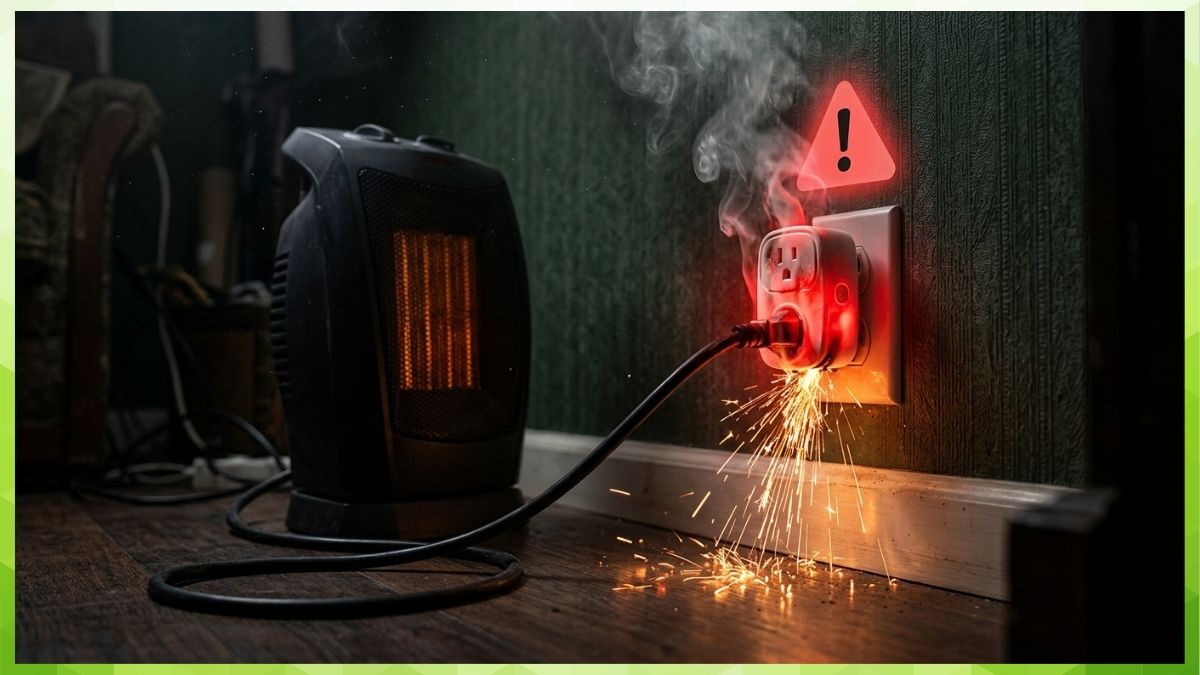
You should never plug 240V appliances (electric dryers, ranges, central AC), major appliances with dedicated circuits (refrigerators, washing machines, dishwashers), or life-supporting medical devices (CPAP machines, oxygen concentrators) into a standard smart plug. You should also never plug a smart plug into a power strip, extension cord, or another smart plug. For 120V heavy appliances like space heaters, window AC units, and dehumidifiers, a properly rated 15A smart plug with UL or ETL certification is safe. The rule is simple: check the wattage on the appliance label, confirm the plug is rated above it, and insert the plug directly into a wall outlet.
Why This Question Matters More Than Most People Think?
Most smart plug guides focus on what you can connect. This guide focuses on what you cannot, because the consequences of getting it wrong are not just wasted money on a tripped circuit. They include overheated wiring, damaged appliances, voided warranties, and in serious cases, electrical fires.
The U.S. Consumer Product Safety Commission estimates that portable heaters alone caused an average of 1,700 house fires every year between 2017 and 2019. A significant share of those involve improper use of extension cords and underpowered adapters. Smart plugs are not inherently dangerous, but plugging the wrong appliance into the wrong plug is a well-documented path to the same outcome.
The checklist in this article tells you exactly which appliances fall into which category, why, and what to use instead.
Category 1: 240V Appliances (Never Use a Standard Smart Plug)
Standard smart plugs operate on 120V circuits. The following appliances require 240V dedicated circuits and are physically incompatible with standard smart plugs regardless of amperage rating.
Electric clothes dryers are among the most power-intensive residential appliances, typically drawing 5,000 to 7,500 watts on a 240V/30A dedicated circuit. No standard 15A smart plug is remotely compatible. Washing machines and dryers should always be plugged directly into a wall outlet, as they require too much power and have too many moving mechanical parts. Using an extension cord or adapter as the source of electricity makes your home susceptible to a possible fire due to potential overheating.
Electric ranges and ovens draw 3,000 to 12,000 watts on 240V circuits. Like dryers, they require dedicated high-voltage circuits that smart plugs cannot interface with.
Central air conditioning systems are hardwired into dedicated 240V circuits and are not plug-in appliances at all. No smart plug is applicable. Smart control of central AC is handled through smart thermostats, not smart plugs.
Electric water heaters (tank type) run on 240V and draw 3,000 to 4,500 watts. Like the above, they are hardwired and incompatible with any plug-in device.
How to identify 240V appliances: Look at the outlet behind the appliance. A 240V outlet has three or four prongs and is larger than a standard outlet. If the appliance’s plug does not fit a standard household outlet, it is a 240V appliance.
Category 2: Major Appliances on Dedicated Circuits
These appliances operate on 120V but require dedicated circuits due to high or continuous power draw, mechanical complexity, or motor start-up surge current.
Refrigerators and chest freezers run continuously and draw 300 to 800 watts during compressor cycles, with surge current during startup that can exceed the continuous draw significantly. While technically within the wattage limits of a 15A smart plug, refrigerators are not recommended for smart plug use. They should be plugged directly into a dedicated wall outlet because they run continuously without active monitoring, and any power interruption from a failed smart plug, a dropped Wi-Fi connection, or an accidental schedule can spoil food or damage the compressor. Most refrigerator manufacturers explicitly recommend a dedicated circuit.
Washing machines draw 500 to 1,000 watts during washing cycles but can surge significantly higher during the spin cycle. They should always be plugged directly into a wall outlet. The use of any intermediary device may cause premature part failure and can void the appliance warranty.
Dishwashers are typically hardwired or plugged into dedicated circuits under the sink. They draw 1,200 to 1,500 watts and run complex multi-stage cycles where a power interruption mid-cycle can damage the appliance or leave dishes in a dangerous mid-heat state.
Microwave ovens draw 800 to 1,500 watts and are recommended to be plugged directly into wall outlets without any intermediary. While a 15A smart plug is technically rated for the wattage, microwave power supplies are sensitive to voltage irregularities that a cheap or failing smart plug relay can introduce.
Category 3: Medical and Life-Supporting Devices
This category is absolute. No smart plug should ever be placed between a power outlet and a life-supporting medical device.
CPAP and BiPAP machines require uninterrupted power throughout the night. A smart plug that drops its Wi-Fi connection, fires an accidental schedule, or experiences a relay failure interrupts that supply without warning. This is a direct health risk for users with sleep apnea or related conditions.
Oxygen concentrators require continuous, stable power. Any interruption is dangerous. These devices should be plugged directly into a dedicated outlet on a circuit that is not shared with other high-draw appliances.
Home dialysis equipment, infusion pumps, and ventilators fall into the same category. The automation and scheduling features that make smart plugs useful for appliances are exactly the features that make them dangerous for life-supporting devices.
Implanted device chargers (such as external defibrillator chargers) should also be kept off smart plugs for the same reasons.
Category 4: High-Draw Kitchen Appliances
These appliances are 120V and nominally within the wattage range of a 15A smart plug, but their usage patterns make smart plug use inadvisable.
Air fryers draw 1,200 to 2,000 watts. Standard models can draw as much as 2,000 watts, far exceeding most standard smart plugs’ limits. Even within the 15A limit, air fryers heat rapidly and should be supervised during use. A smart plug adds no safety benefit and introduces a point of failure in the circuit.
Toasters and toaster ovens draw 800 to 1,500 watts and are designed for short supervised use. The appliance should be unplugged when not in use, which eliminates the main use case for a smart plug. Additionally, placing any intermediary device in the circuit of an appliance that generates heat inside an enclosed space is not recommended.
Slow cookers typically draw 200 to 300 watts, technically safe for a 15A plug. However, slow cookers run for 6 to 10 hours unattended. Any power interruption from a smart plug relay failure or Wi-Fi dropout restarts the cooking cycle from cold, creating a food safety risk for proteins. Slow cookers are generally designed to be plugged directly into a dedicated outlet and left alone.
Instant Pots and pressure cookers operate under pressure. A power interruption during a pressurized cooking cycle can leave the device in an indeterminate state. These should be plugged directly into wall outlets.
Category 5: Power Strip and Extension Cord Combinations
This category covers incorrect setup rather than specific appliances. It applies regardless of what is plugged in.
Never plug a smart plug into a power strip. A smart plug inserted into a power strip does not solve the overload problem. The power strip itself becomes the weakest link in the chain. Extension cords, power strips, and surge protectors must be able to handle the amount of current required by the appliance. Defective cords fail to meet current industry safety standards and can be overloaded easily if they are used to plug in even small appliances. For a 15A heavy appliance, the risk is considerably higher.
Never plug a smart plug into an extension cord. Air conditioners and space heaters are two appliances you should never plug into an extension cord because plugging these devices into an extension cord can lead to overheating and pose a fire hazard. This risk is compounded when a smart plug is placed in the chain.
Never daisy-chain smart plugs. Plugging one smart plug into another is prohibited by all major manufacturers and doubles the number of relay components that can fail under load.
The rule: A smart plug must be inserted directly into a wall outlet to function safely with heavy appliances.
What IS Safe to Plug Into a 15A Smart Plug?
For clarity, here is what a properly rated 15A smart plug is safe for:
Space heaters rated at 1,500W or below are safe in a 15A/1,800W plug when the plug is UL or ETL certified, flame-retardant, and inserted directly into a wall outlet. Window AC units under 10,000 BTU drawing under 1,440W are safe. Dehumidifiers drawing 300 to 700W are well within limits. Tower fans, box fans, and portable air purifiers are safe. Desktop computers and monitors are safe. Small chest freezers in a garage or workshop are generally safe if the manufacturer does not specify a dedicated circuit. Humidifiers, electric blankets, and heated mattress pads are safe within their wattage ratings.
The complete guide to the safest 15A smart plugs for these appliances is available here: Best Smart Plugs for Heavy Appliances →
Frequently asked questions
Technically a refrigerator is within the wattage range of a 15A smart plug, but it is not recommended. Refrigerators require dedicated circuits, run continuously, and are sensitive to power interruptions. A smart plug that fails, drops its Wi-Fi connection, or fires an accidental schedule will cut power and risk spoiling food or damaging the compressor. Plug your refrigerator directly into a dedicated wall outlet.
Not recommended. Microwaves draw 800 to 1,500 watts and are designed to be plugged directly into a dedicated wall outlet. While a 15A rated plug is technically sufficient for the wattage, microwave power supplies are sensitive to voltage irregularities. Most electricians and appliance manufacturers recommend a dedicated circuit for microwaves.
Yes, with the right plug. A space heater rated at 1,500W or below is safe with a properly rated 15A smart plug that is UL or ETL certified, has a flame-retardant housing, and is inserted directly into a wall outlet. Never use a standard or budget smart plug rated below 15A with a space heater.
No. CPAP machines are medical devices that require uninterrupted power throughout use. A smart plug introduces the risk of a power interruption from relay failure, Wi-Fi dropout, or accidental schedule activation. CPAP machines should be plugged directly into a dedicated wall outlet.
An overloaded smart plug will heat up as current exceeds its rated capacity. In a certified plug with proper protective components, the internal relay may trip and cut power. In an uncertified or substandard plug, the housing can melt, deform, or in worst cases ignite. This is why certification (UL or ETL) and flame-retardant housing are non-negotiable for heavy appliance use.
With caution. Electric kettles draw 1,000 to 1,500 watts and are within the range of a 15A smart plug. However, kettles are designed for very short supervised use and should be turned off and unplugged when not in use. The practical benefit of adding a smart plug to a kettle is minimal. If you do use one, ensure it is a 15A certified plug and never leave the kettle scheduled to activate when unsupervised.
No. A smart plug must be inserted directly into a wall outlet when used with any heavy appliance. Plugging a space heater through a smart plug into an extension cord creates multiple points of potential overload and is explicitly advised against by CPSC, most smart plug manufacturers, and electrical safety standards.
Standard consumer smart plugs are designed for 120V residential circuits. Some industrial and commercial smart relay modules support 240V, but these are hardwired installations that require an electrician, not plug-in devices. For 240V appliances, smart control is typically achieved through smart circuit breakers or smart thermostats rather than smart plugs.
Final words
The appliances you should never plug into a standard smart plug fall into five clear categories: 240V appliances that are physically incompatible, major appliances on dedicated circuits where interruptions cause harm, medical devices where power continuity is safety-critical, high-draw kitchen appliances designed for direct-outlet use, and any appliance connected through a power strip or extension cord.
For everything else at 120V and 1,800W or below, including space heaters, window AC units, dehumidifiers, and tower fans, a properly rated 15A smart plug with UL or ETL certification inserted directly into a wall outlet is both safe and genuinely useful.
Last updated: April 2026 | Sources: U.S. Consumer Product Safety Commission, Tom’s Guide, SlashGear, Americord, National Electrical Code, Amazon Smart Plug Safety Guidelines.