Last Updated on February 12, 2026 by Kravelv Spiegel
Trends are fun. Let’s just admit it.
You scroll Pinterest for twenty minutes and suddenly you’re convinced you need fluted timber panels, brushed brass everything, and a pastel blue fridge that looks like it belongs in a 1950s movie.
And hey — sometimes that works.
But kitchens aren’t throw pillows. Renovating one costs serious money, serious time, and usually at least one minor meltdown halfway through the process. So choosing something that still feels good in ten years? That matters.
The best kitchen designs don’t scream “2026.” They feel intentional. Calm. Functional. And a little bit personal.
Let’s talk about the modern kitchen trends that actually last — not just photograph well.
Minimalist Cabinetry (But Not Cold)
Minimalism in kitchens has been around for a while now. Flat-panel cabinets. Clean lines. No fussy detailing.
And honestly? It’s not going anywhere.
Why it lasts:
- It doesn’t compete with the rest of your home.
- It feels calm.
- It works in both small and large spaces.
- It ages better than ornate styles.
But here’s where people get it wrong.
Minimal doesn’t mean sterile.
All-white, ultra-gloss cabinets with harsh lighting can start to feel like a dentist’s office if you’re not careful. The trick is warmth. Think soft matte finishes. Warm whites. Subtle wood tones. Even muted greys.
Handleless cabinetry is still strong, too. Push-to-open systems or integrated pulls keep things streamlined without looking overly futuristic.
And the beauty of simple cabinetry? You can update hardware or lighting later without ripping the whole kitchen apart.
That’s longevity.
Smart Storage (The Kind You Don’t See)
No one posts a glamorous photo of a pull-out bin drawer.
But they should.
Smart storage is probably the least “Instagrammable” trend — and the most important one.
Modern kitchens are leaning heavily into hidden function:
- Deep drawer systems instead of lower cabinets
- Pull-out pantry towers
- Appliance garages
- Corner cabinet carousels
- Built-in spice drawers
- Hidden charging stations
These aren’t flashy. They’re practical. And practicality never goes out of style.
When you’re planning layouts, think about how you actually cook. Do you bake often? You’ll want wide drawers for trays. Use lots of small appliances? Plan where they live.
A kitchen that functions well feels modern forever.
Natural Materials & Texture
Here’s something interesting.
Even as kitchens become sleeker, they’re also becoming softer.
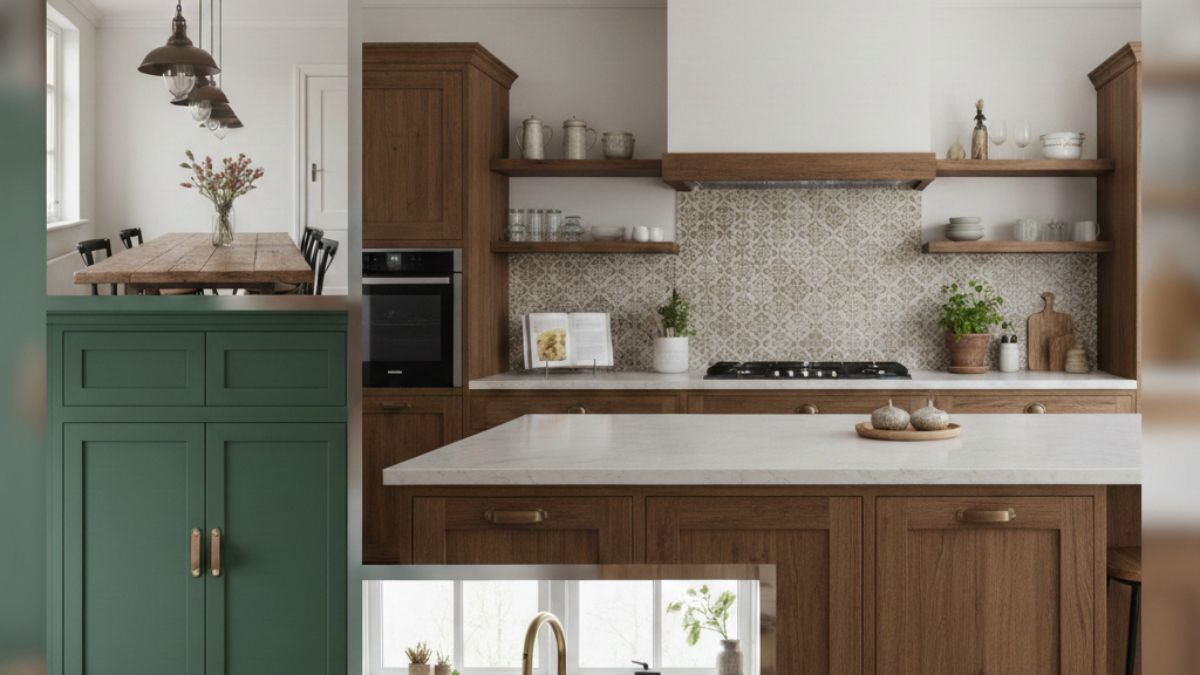
Natural materials are anchoring modern spaces so they don’t feel cold or overly manufactured.
We’re seeing more:
- Timber cabinetry or accents
- Stone benchtops with visible veining
- Textured splashbacks
- Handmade tiles
- Warm metals (brass, copper, aged finishes)
These elements bring depth. And depth keeps a kitchen from feeling flat.
Stone, especially, has long-term appeal. Marble, quartzite, granite — they’ve been used for centuries for a reason. They age beautifully (even with imperfections).
And timber? It just feels human.
There’s something about natural grain that makes a space feel grounded. Less showroom. More home.
Statement Lighting That Feels Intentional
Lighting has quietly become one of the biggest defining features of modern kitchens.
Not just recessed ceiling lights. Actual statement pieces.
Pendant lights over islands are still strong — but the style has evolved. Oversized glass globes. Sculptural forms. Soft, diffused light.
The key word here is intentional.
Lighting shouldn’t look like it was added as an afterthought. It should feel like part of the design story.
Layered lighting also makes a huge difference:
- Task lighting under cabinets
- Soft ambient lighting
- Accent lighting inside glass cabinets
When done right, it changes the entire mood of the room.
And good lighting? It never dates. Poor lighting does.
Open Shelving: Yes or No?
Ah. The controversial one.
Open shelving looks amazing in photos. Styled ceramics. Neatly stacked bowls. A trailing plant for good measure.
But real life?
Dust. Grease. Mismatched mugs you don’t want anyone to see.
Here’s the balanced take.
Open shelving works best when:
- It’s limited (not replacing all upper cabinets)
- You genuinely have beautiful items to display
- You don’t mind a little upkeep
A couple of floating shelves to break up heavy cabinetry? Timeless.
An entire wall of exposed storage in a busy family kitchen? Risky.
Some designers are now blending both — glass-front cabinets that give openness without full exposure. It’s a softer approach. And probably more practical long term.
So yes… but in moderation.
Color Choices That Age Well
This one’s important.
Bold colors can be incredible. Deep green cabinetry. Navy islands. Even black kitchens.
But longevity often lives in restraint.
Neutral base + personality in accents tends to last longer.
For example:
- Neutral cabinetry
- Statement island color
- Bold bar stools
- Unique backsplash
That way, if your taste shifts (and it will), you’re not ripping out the entire kitchen.
Trend-heavy color across all cabinetry can feel amazing for three years… and then suddenly feel very specific to a time.
Think flexible, not frozen-in-time.
The Return of “Warm Modern”
Ultra-modern kitchens used to lean sharp and high-contrast. Stark black and white. Gloss finishes. Hard edges.
Now, we’re seeing what designers call warm modern.
It blends:
- Clean lines
- Soft textures
- Natural finishes
- Warmer color palettes
It feels current without trying too hard.
And that’s usually the secret. Kitchens that don’t try too hard age the best.
What Actually Makes a Kitchen Timeless?
It’s not about copying trends blindly.
It’s about balance.
Timeless kitchens usually share a few traits:
- Functional layouts
- Quality materials
- Thoughtful lighting
- Storage that makes life easier
- A mix of classic and modern elements
They don’t scream for attention. They quietly work.
And honestly, after the dust settles and the installers leave, that’s what you want.
A space that feels good on a random Tuesday night when you’re reheating leftovers. Not just when guests come over.
Final Thoughts (Before You Demo Everything)
Design trends will keep evolving. That’s inevitable.
But if you anchor your kitchen around simplicity, functionality, and warmth, you’re far less likely to regret your choices.
Before committing, ask yourself:
- Will I still like this in 8–10 years?
- Is this practical for how I live?
- Am I choosing it because I love it… or because it’s everywhere online?
The best kitchens don’t chase trends.
They borrow from them — carefully.
And then they settle into something that feels like home.